
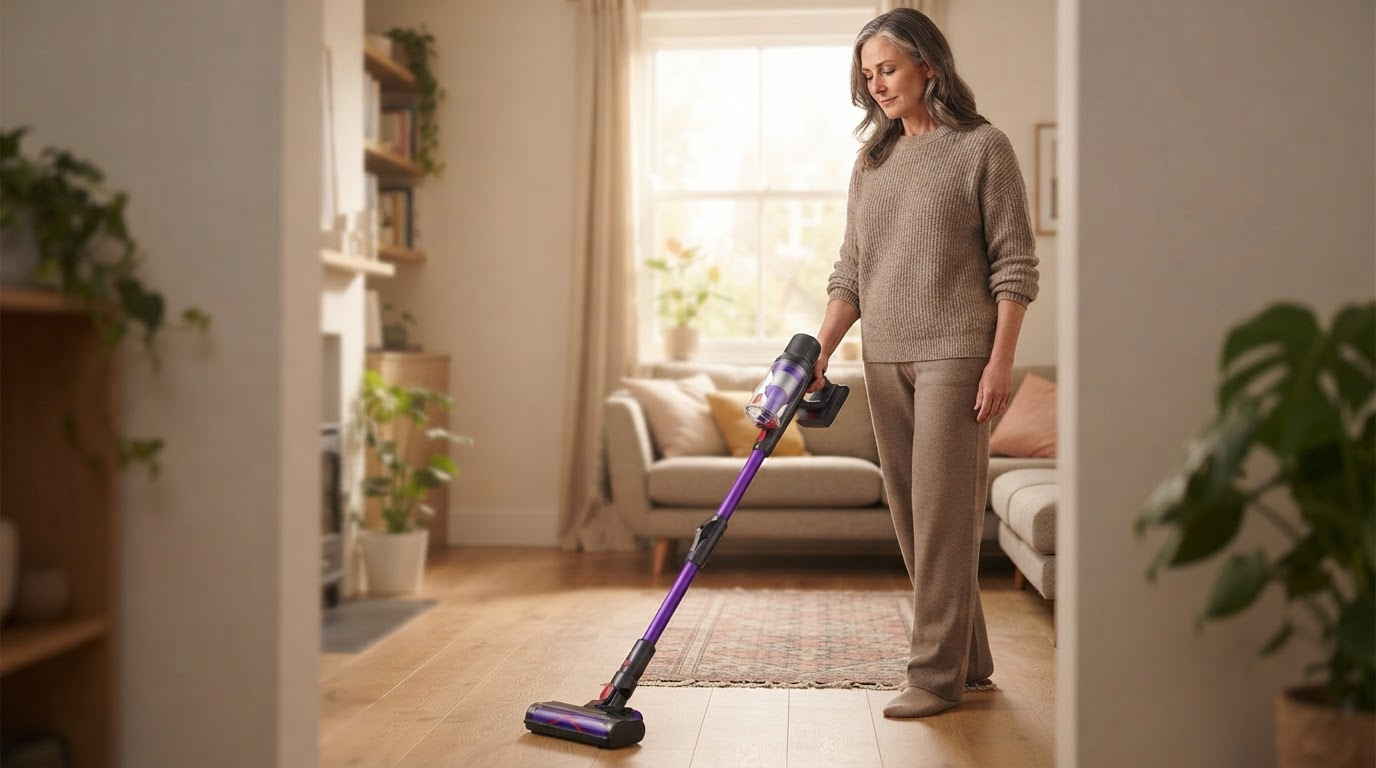
If a vacuum cleaner starts to feel weaker than usual, it does not always mean the motor is damaged. In many homes, reduced suction is caused by restricted airflow. Dust, hair, fine particles and lint can slowly build up inside the dust cup, filter, floor head or attachment until air cannot move through the vacuum as freely as it should.
For cordless vacuum cleaners, this can feel more noticeable because they are often used for quick daily clean-ups: crumbs after meals, dust near skirting boards, pet hair on fabric, or dirt carried in from the hallway. When suction drops, a short check of the main airflow path is usually the best place to start.
1. The Dust Cup Is Too Full
A full dust cup is one of the most common reasons a vacuum cleaner loses suction. When dust and debris reach the maximum fill line, there is less room for air to circulate. Even if the vacuum still turns on, it may struggle to pick up dirt properly.
Empty the dust cup before it becomes tightly packed. This is especially important after cleaning fine dust, pet hair, cereal, crumbs or heavier debris. Fine particles can settle around the filter area and reduce airflow faster than larger pieces of dirt.
If your vacuum has a clear dust cup, use it as a quick visual check. If the cup looks crowded or dust is sitting close to the filter, empty it before continuing.
2. The Filter Needs Cleaning
Filters protect the motor and help keep dust inside the vacuum. Over time, they can collect fine particles that are not always obvious from the outside. A filter can look only slightly dusty but still restrict airflow.
Check the filter regularly and clean it according to the product instructions. If the filter is washable, allow it to dry completely before putting it back into the vacuum. A damp filter can reduce performance and may create unwanted odours.
If suction improves after the filter is cleaned or replaced, the filter was likely the main issue.
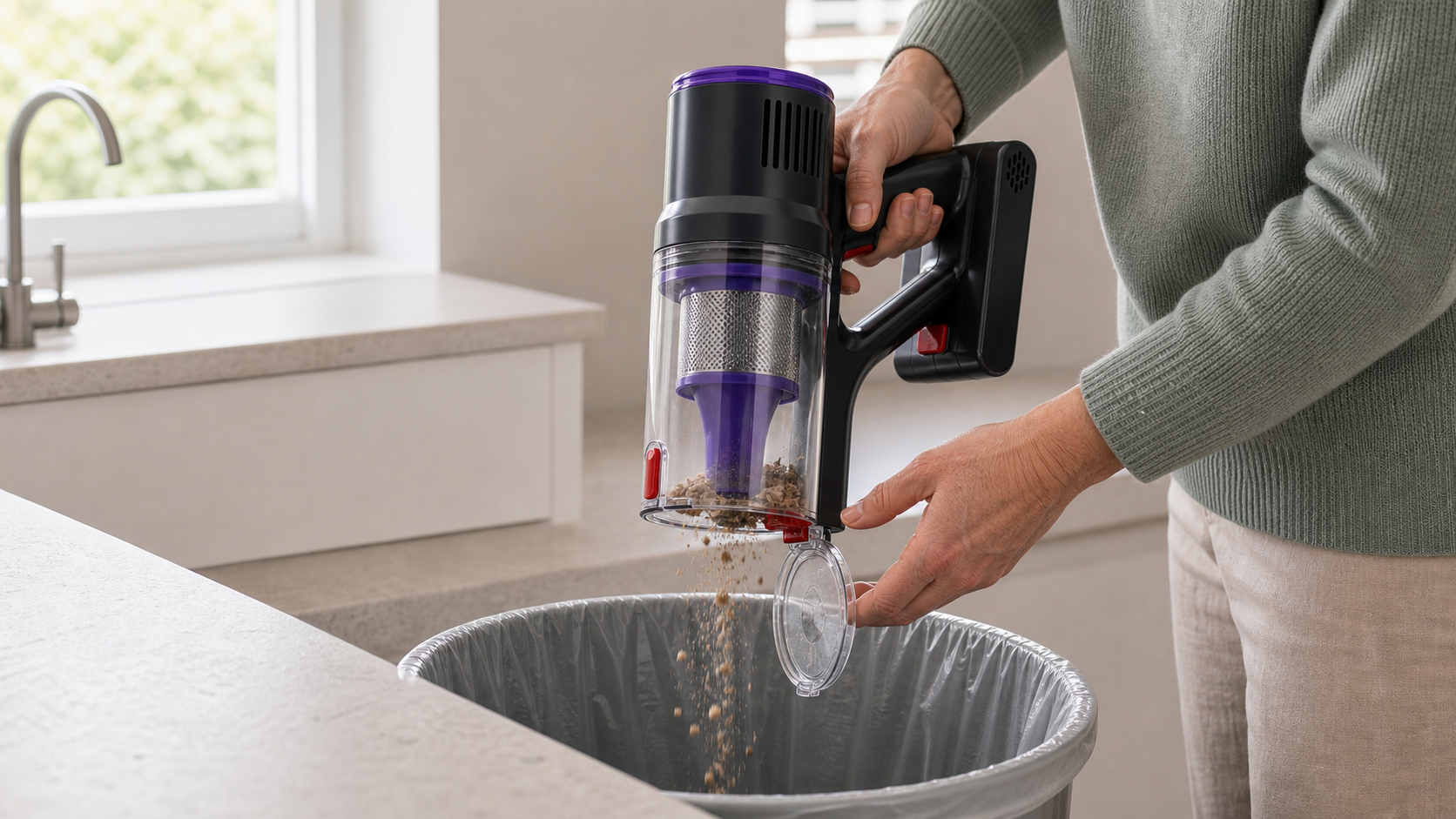 Emptying the dust cup and checking the filter helps maintain steady suction.
3. The Floor Head or Brush Roller Is Blocked
The floor head is where the vacuum meets the dirt, so it naturally collects hair, threads, lint and small debris. If the brush roller cannot spin freely, or if debris blocks the air path behind the roller, pickup can feel weak even when the motor sounds normal.
Turn the vacuum off before checking the floor head. Look around the roller, the side caps and the opening where dirt enters the tube. Carefully remove wrapped hair or fibres. This matters most for carpets and rugs, where hair and lint can be pulled into the brush area.
If the vacuum picks up well on hard floor but struggles on rugs, the floor head is worth checking first.
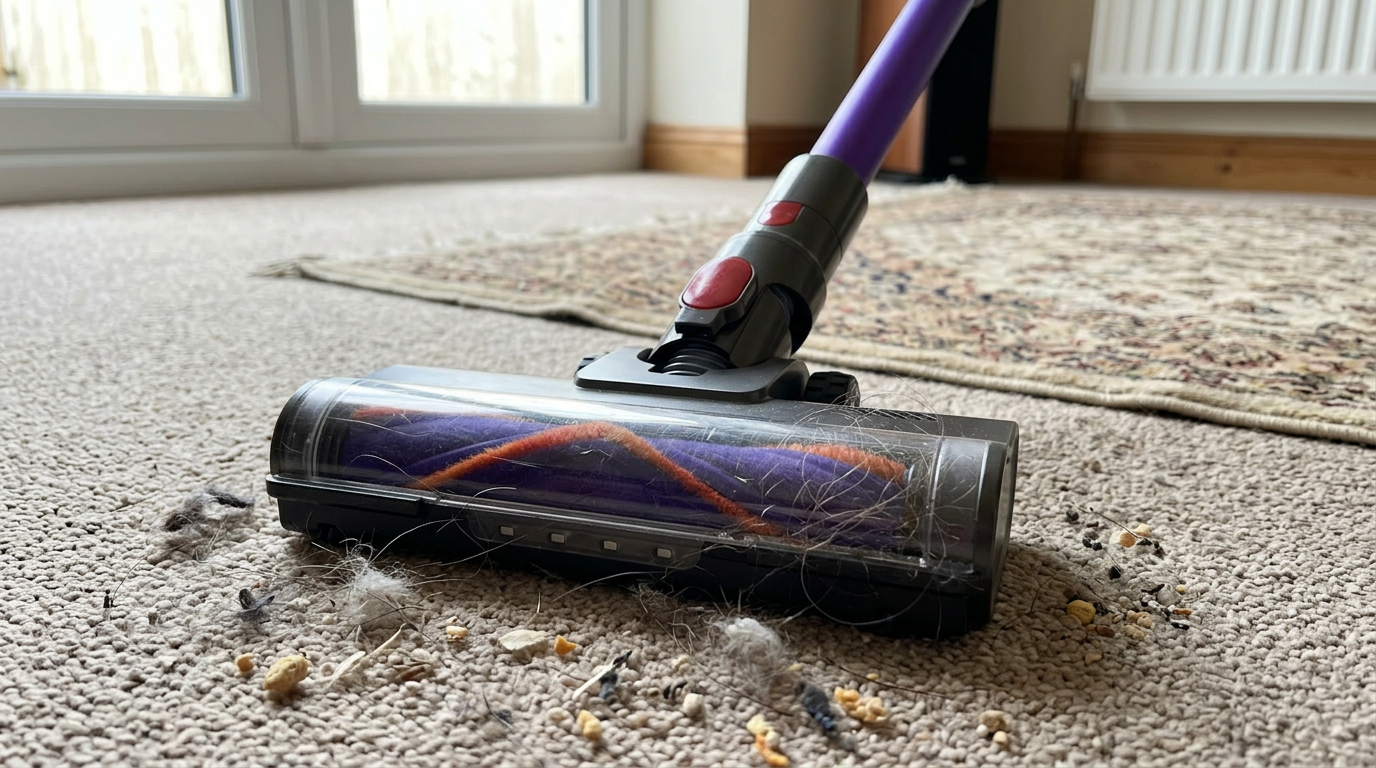 Hair, lint and debris around the floor head can reduce pickup on rugs and carpets.
4. The Tube or Attachment Has a Hidden Blockage
Sometimes suction loss is caused by a blockage you cannot see immediately. A small toy part, paper, clump of hair or compacted dust can lodge inside the tube or handheld attachment.
Detach the tube or tool and look through the airflow path if possible. Check both ends, not just the nozzle. If an attachment is used for sofas, stairs or car interiors, lint and fibres can build up inside the narrow opening.
This is why it helps to test the vacuum in more than one setup. If suction feels better in handheld mode than with the tube attached, the tube or floor head may be restricting airflow.
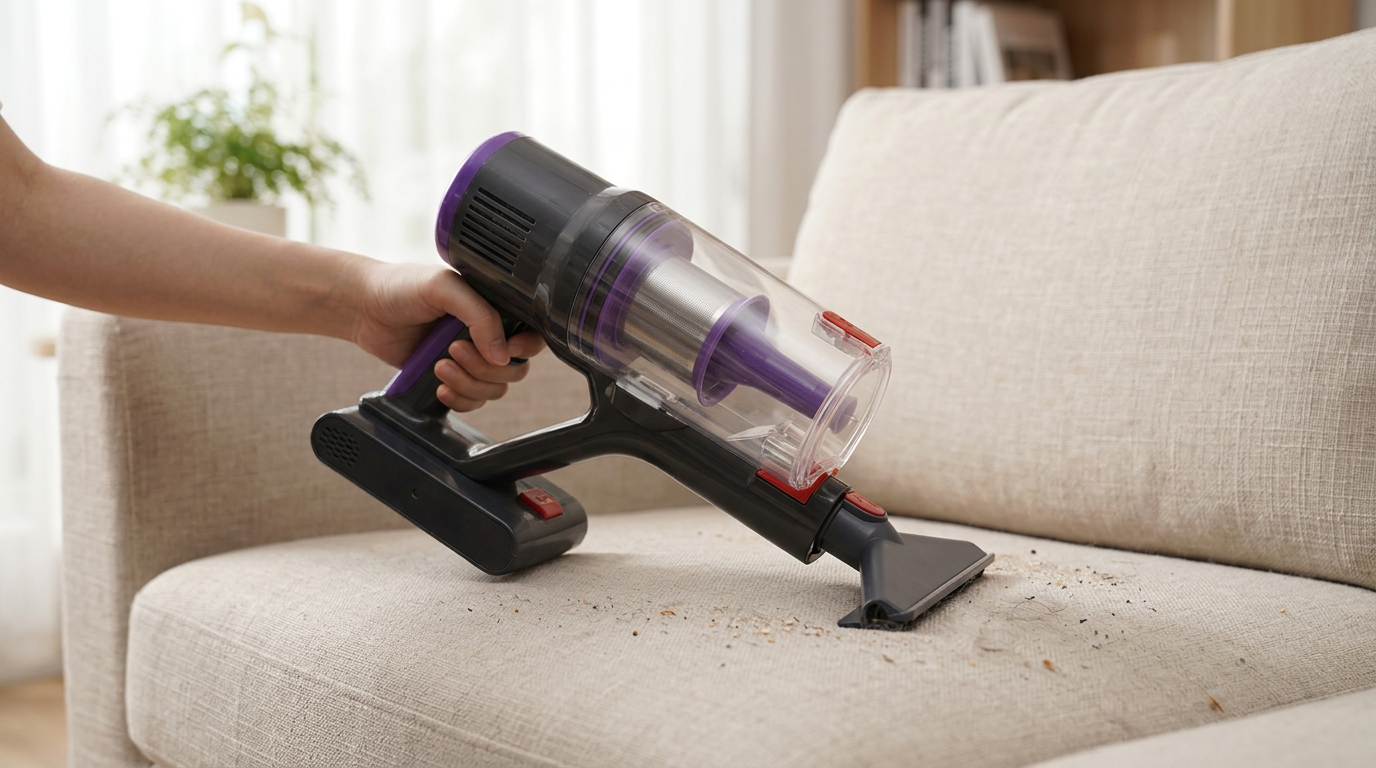 Attachments can also restrict airflow if lint or fibres collect inside.
5. The Battery Is Low or the Power Mode Is Not Suitable
On a cordless vacuum cleaner, suction may feel different depending on the battery level and cleaning mode. A low battery can reduce runtime, and some cleaning jobs need a stronger mode than others.
For light dust on hard floors, a standard mode may be enough. For rugs, pet hair, heavier crumbs or deeply textured carpet, a higher power mode may be more suitable. If the vacuum suddenly feels weak near the end of a cleaning session, recharge it fully and test again before assuming there is a fault.
6. Fine Dust and Pet Hair Need Slower Cleaning
Not all dirt behaves the same way. Fine dust can clog filters quickly, while pet hair and long fibres can wrap around the brush roller. Thick carpets and high-traffic rugs may need slower passes so the floor head has time to lift debris.
If you rush over a rug and the vacuum leaves dirt behind, try moving more slowly in overlapping passes. This is not only about suction power; it is also about giving the brush and airflow time to work.
7. A Simple Suction Check Routine
When suction feels weak, check the vacuum in this order:
- Empty the dust cup.
- Check and clean the filter.
- Inspect the floor head and brush roller.
- Look for blockages in the tube or attachment.
- Recharge the battery fully.
- Test on both hard floor and carpet or rug.
This routine is simple, but it helps separate a maintenance issue from a true performance problem.
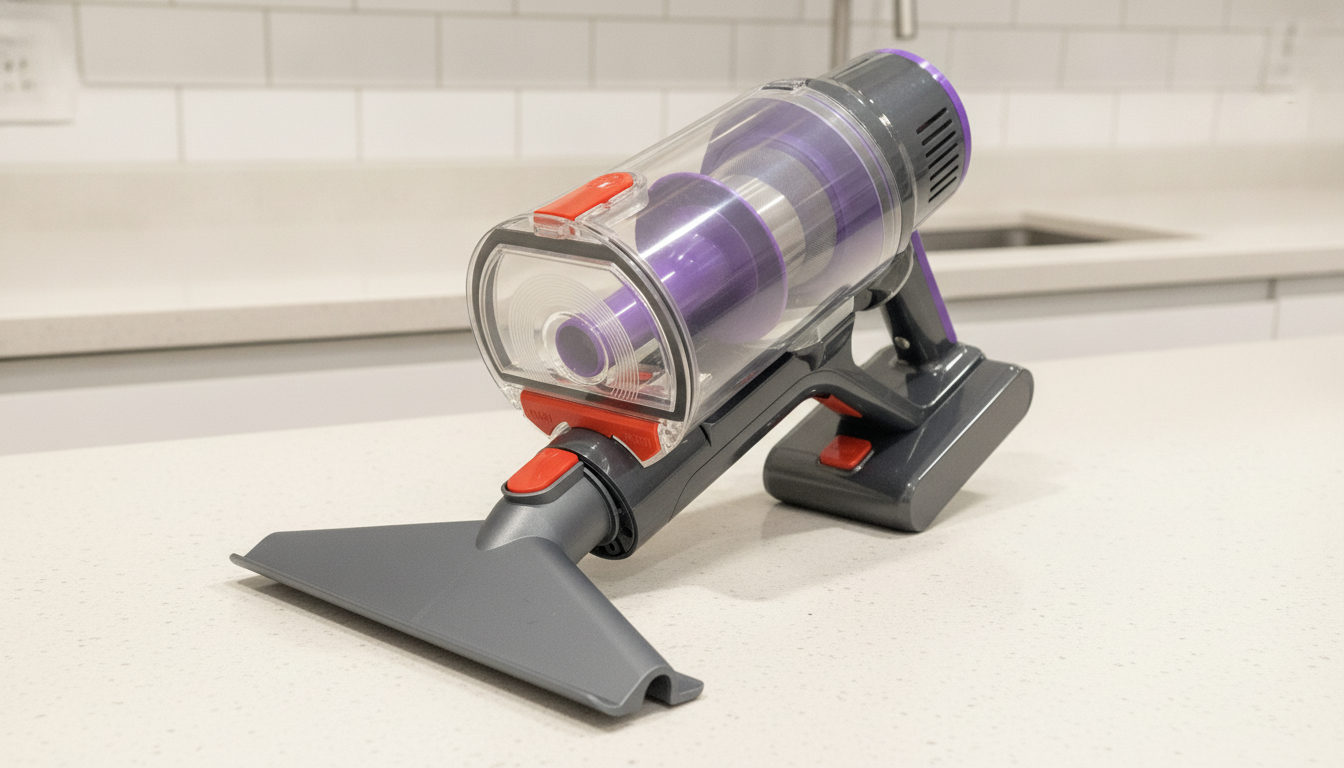 Testing the vacuum in different setups can help locate where airflow is being restricted.
8. Where the SIXPAD S80 Fits Into Everyday Maintenance
The SIXPAD S80 is designed for everyday home cleaning across hard floors, rugs, sofas and smaller areas. Like any cordless vacuum cleaner, it performs best when airflow is kept clear. Emptying the dust cup, checking the filter and keeping the floor head free from hair can help maintain steady pickup during regular use.
The useful thing about a cordless vacuum is that these checks are usually quick. You can spot a full dust cup, remove lint from the floor head, or switch to a handheld attachment without setting up a large machine.
Final Thoughts
If your vacuum cleaner is losing suction, start with the basics before replacing it. A full dust cup, dirty filter, blocked brush roller or hidden attachment blockage can all make a vacuum feel weaker than it really is.
Regular maintenance keeps airflow clear and helps your cordless vacuum perform more consistently. For most households, a few quick checks after heavier cleaning sessions are enough to prevent many suction problems before they become frustrating.