
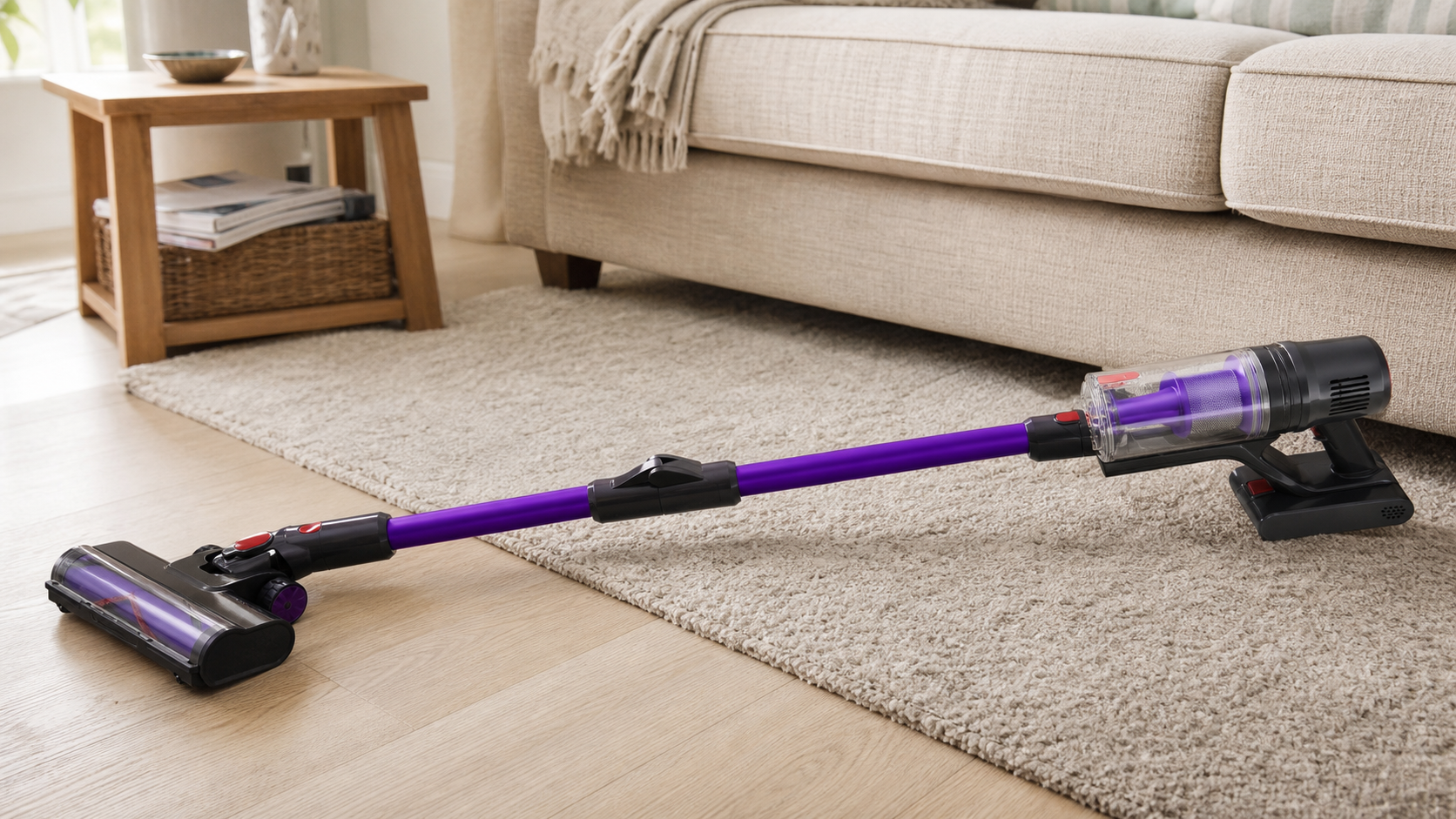
A vacuum brush roll works close to the floor, so it naturally collects more than dust. Hair, thread, carpet fibres and small pieces of debris can wind around the roller and build up inside the floor head.
At first, the change may be easy to miss. The vacuum may still run, but the brush roll may turn more slowly, become noisier or be more difficult to rotate. On carpets, the floor head may feel harder to push. On hard floors, it may leave some debris behind instead of picking it up in one pass.
Cleaning the brush roll is a simple maintenance job, and it is worth checking before assuming the vacuum has lost suction. The aim is to clear the moving parts without damaging the roller, floor head or electrical components.
Why the Vacuum Brush Roll Matters
The brush roll helps loosen dust, crumbs, hair and fibres from the floor so the vacuum can lift them into the airflow. This is especially useful on carpet, where dirt can settle between the fibres, but the roller also helps guide debris towards the inlet on many hard-floor cleaning heads.
When hair wraps tightly around the roller, it adds resistance. The brush roll may not rotate as freely, and the motorised floor head has to work harder. A heavy tangle can also reduce contact between the roller and the floor.
Signs Your Brush Roll Needs Cleaning
It is a good time to inspect the brush roll if you notice any of the following:
Visible hair or thread wrapped around the roller
The floor head feels harder to push across carpet
The roller sounds different or stops turning freely
Dust and hair remain on the floor after a normal pass
Debris is collecting around the edges of the floor head
The floor head makes an unusual noise or gives off a hot, dusty smell
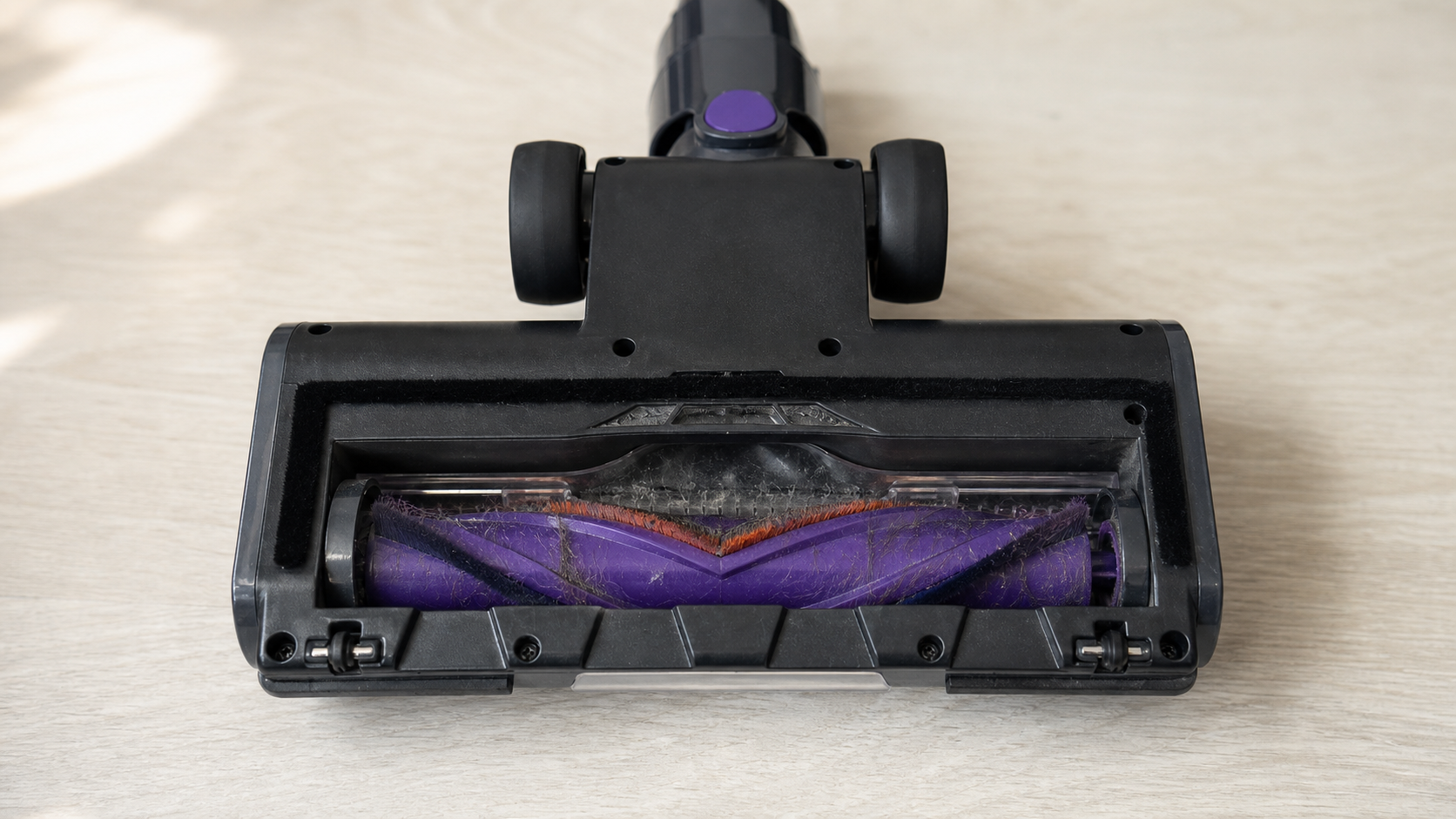 Tangled hair and fibres wrapped around a purple vacuum brush roll.
Before You Start
Switch the vacuum off and disconnect it from the charger before touching the floor head. If the battery is removable, remove it as well, following the instructions for your model.
Place the floor head on a stable, well-lit surface. A dry towel or sheet of paper underneath can catch loose dust and make the parts easier to see. Keep a small bin nearby for removed hair and debris.
You may need a pair of blunt-ended scissors or a seam ripper for tightly wrapped hair, but use them carefully. Avoid cutting towards the roller surface, bristles, seals, wiring or plastic housing.
How to Clean a Vacuum Brush Roll
-
Remove the Floor Head
Detach the floor head from the vacuum tube if your model allows it. This makes the underside easier to inspect and prevents the rest of the vacuum from moving while you work.
Turn the floor head over and check where the roller is held in place. The release method varies between models, so follow the markings on the floor head or the instructions supplied with your vacuum.
-
Release and Remove the Brush Roll
Unlock the brush roll release mechanism and slide the roller out from the side. Do not force it. If the roller does not move easily, check that the lock is fully released and that trapped hair is not holding the end in place.
Keep the end cap and release parts in their original position. The roller should return in the same orientation when it is reinstalled.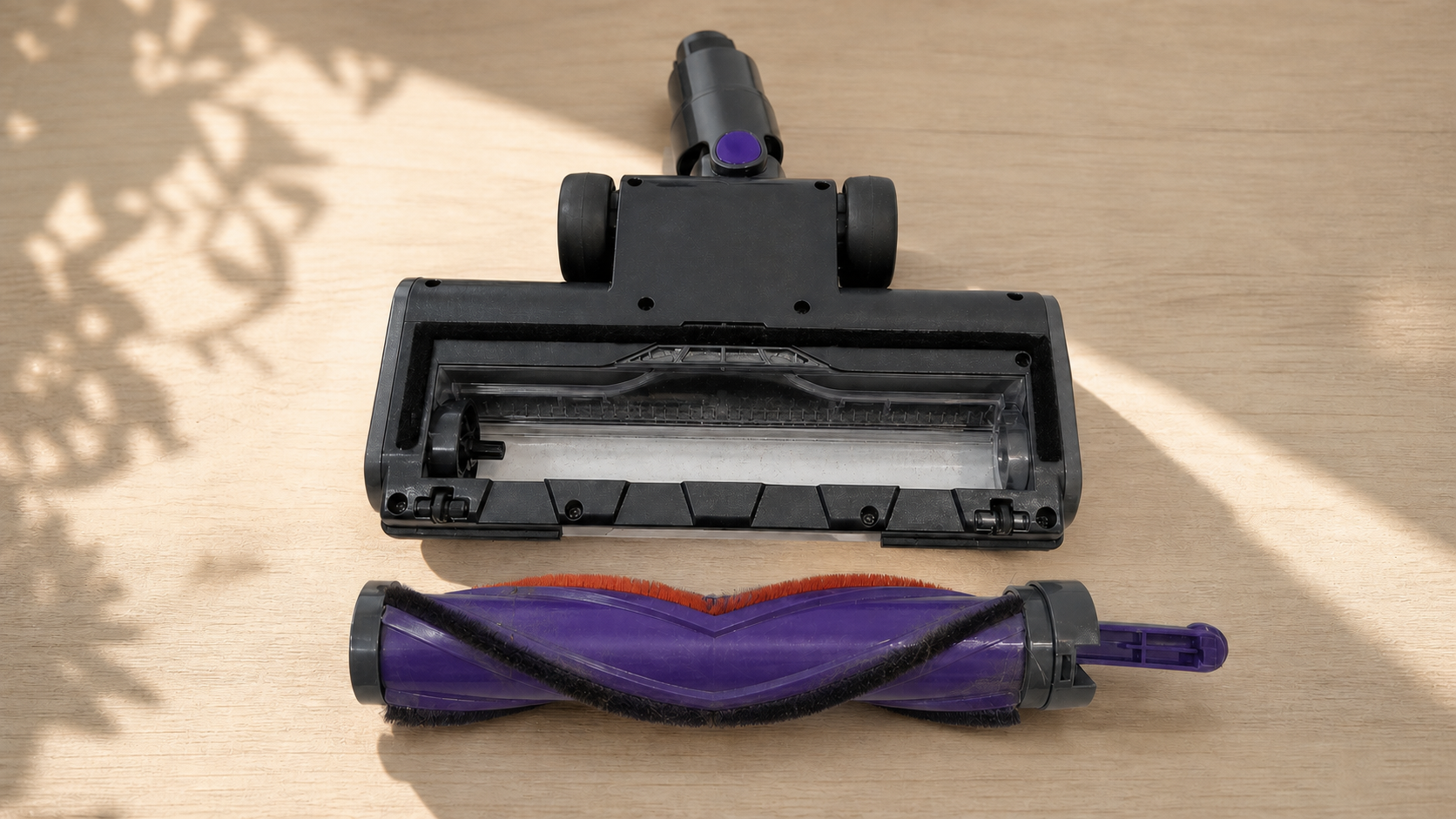 Removable purple brush roll taken out of a cordless vacuum floor head.
-
Remove Tangled Hair and Thread
Start by pulling away loose hair with your fingers. For tighter strands, gently lift the hair away from the roller before cutting it in short sections. Work along the length of the roller rather than trying to pull one large tangle free at once.
Pay attention to both ends of the brush roll. Hair often gathers near the end caps, where it may be less visible but can still restrict movement.
-
Check Inside the Floor Head
Once the roller is out, look inside the floor head for compacted dust, hair and fibres. Remove loose debris by hand or with a soft, dry brush. Also check the air inlet behind the roller, as a small blockage here can make the vacuum feel weaker.
Do not rinse or immerse a motorised floor head. It contains electrical parts and should be kept dry unless the manufacturer specifically states otherwise.
-
Clean the Brush Roll Surface
Wipe the roller with a dry or slightly damp cloth to remove fine dust. Whether the roller itself can be washed depends on the model, so check the care instructions before rinsing it.
If the roller is washable, let it dry completely before reinstalling it. Putting a damp roller back into the floor head can trap moisture and dirt.
-
Reinstall the Brush Roll
Return the clean, dry roller to the floor head in the same orientation. Make sure both ends sit correctly, then close the release or locking cover securely.
Before reconnecting the floor head, turn the roller gently by hand. It should move without heavy resistance and should not feel loose inside the housing.
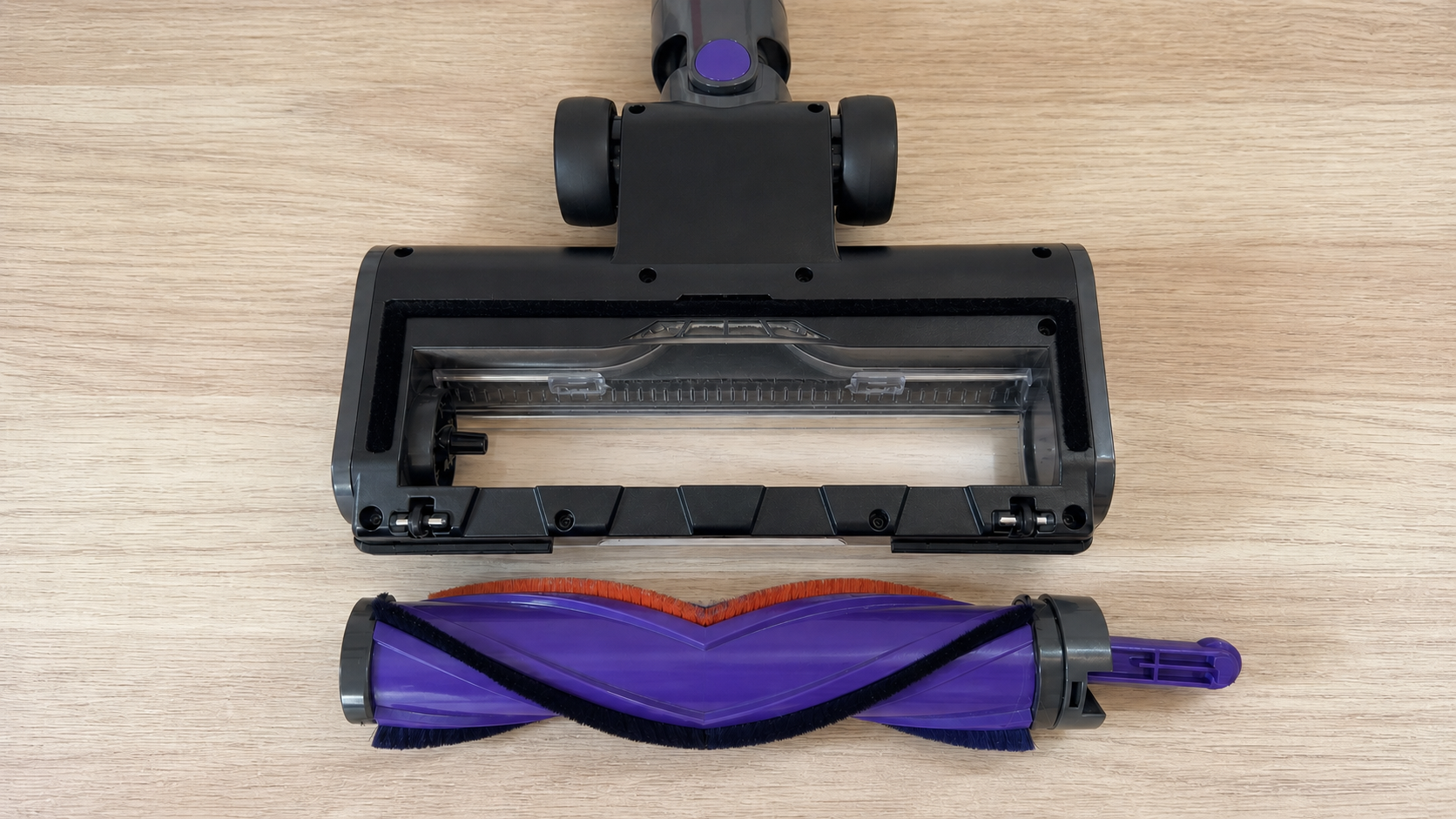 Clean purple vacuum brush roll ready to be reinstalled in the floor head.
How Often Should You Clean the Brush Roll?
There is no single schedule for every home. A quick inspection every one to two weeks is a sensible starting point, especially if the vacuum is used regularly on carpet.
Homes with long hair, pets or high-pile rugs may need more frequent checks. Where the vacuum is used less often, cleaning the brush roll once a month may be enough. It is usually easier to remove a small amount of hair regularly than to deal with a tight, compacted tangle later.
Common Brush Roll Cleaning Mistakes
Cleaning the floor head while the vacuum is switched on or connected to power
Pulling the roller out before fully releasing the side lock
Using a sharp blade close to the roller surface or bristles
Forgetting to check the ends of the roller for hidden hair
Washing a motorised floor head or reinstalling damp parts
Forcing the roller back in when it is not correctly aligned
Brush Roll Care for Carpets and Hard Floors
Carpet fibres and long hair can create tight tangles around the roller. On hard floors, fine dust often collects around the edges and inlet of the floor head. If you clean both types of surface, check the whole underside rather than focusing only on the visible centre of the roller.
After cleaning, test the vacuum briefly on an open area. Listen for unusual sounds and make sure the floor head moves normally before returning to a full cleaning session.
SIXPAD S80 Brush Roll Maintenance
The SIXPAD S80 floor head uses a removable brush roll, which makes wrapped hair and debris easier to reach during routine maintenance. Switch the vacuum off, remove the floor head, release the roller from the side and clean both the roller and the space inside the head.
This practical check can be useful if the vacuum becomes harder to push, leaves hair behind or sounds different during floor cleaning. It also works well alongside regular dust cup and filter care.
Final Thoughts
A tangled brush roll can make a vacuum feel less effective even when the main suction system is working normally. Regularly removing hair, checking the floor head inlet and refitting the roller correctly can keep everyday cleaning simpler.
A few minutes of maintenance is often enough, and checking early helps prevent a small tangle from becoming a larger blockage.