
Knowing how to choose a cordless vacuum cleaner can save you from buying a model that looks impressive on paper but feels inconvenient in daily use. Suction power, battery life and accessories all matter, but the best choice depends on your home, your floor types and the way you actually clean.
A cordless vacuum is often chosen for convenience. It can be easier to pick up quickly, move between rooms and store in a smaller space than a traditional plug-in machine. However, a cordless model still needs to be comfortable to hold, powerful enough for your floors and simple enough to maintain.
This guide explains the practical details to check before buying a cordless vacuum cleaner, from suction and runtime to weight, dust bin size, filters, storage and long-term support.
1. Start with Your Cleaning Routine
Before comparing specifications, think about what you need the vacuum to do most often. A person cleaning a compact apartment once or twice a week may need something different from a household dealing with daily crumbs, pet hair, stairs and mixed flooring.
Ask yourself:
- Do you mostly clean hard floors, carpets, rugs or a mixture?
- Do you need to clean stairs, sofas or a car?
- Do you prefer quick daily clean-ups or longer weekly sessions?
- Do you have pets, long hair or fine dust to manage?
- Where will the vacuum be charged and stored?
- Who will use it most often, and does weight matter?
Start with the cleaning jobs you repeat most often, then compare the specifications.
These questions are useful because they turn a general product search into a more practical buying decision. The right cordless vacuum cleaner is not simply the one with the largest number in the headline. It is the one that matches the jobs you repeat most.
2. Check Suction Power, but Do Not Judge by One Number Alone
Suction power is one of the first things people compare when choosing a cordless vacuum cleaner. It is important, but it should not be judged in isolation.
Some brands highlight watts, while others mention kPa, air watts or motor speed. These figures can help you understand the machine's potential, but real cleaning performance also depends on the floor head, brush design, airflow, seal quality and whether the filter is clean.
A cordless vacuum with strong suction may still perform poorly if the floor head does not suit your carpet, if hair wraps around the brush too easily or if the airway blocks quickly. At the same time, using the highest suction mode for every task can reduce battery life faster than expected.
When comparing models, look for:
- clear suction information rather than vague "powerful cleaning" claims;
- more than one suction mode for different tasks;
- a floor head designed for your main surfaces;
- an easy way to clear blockages; and
- filters that are simple to clean or replace.
For everyday homes, balanced performance usually matters more than maximum power alone.
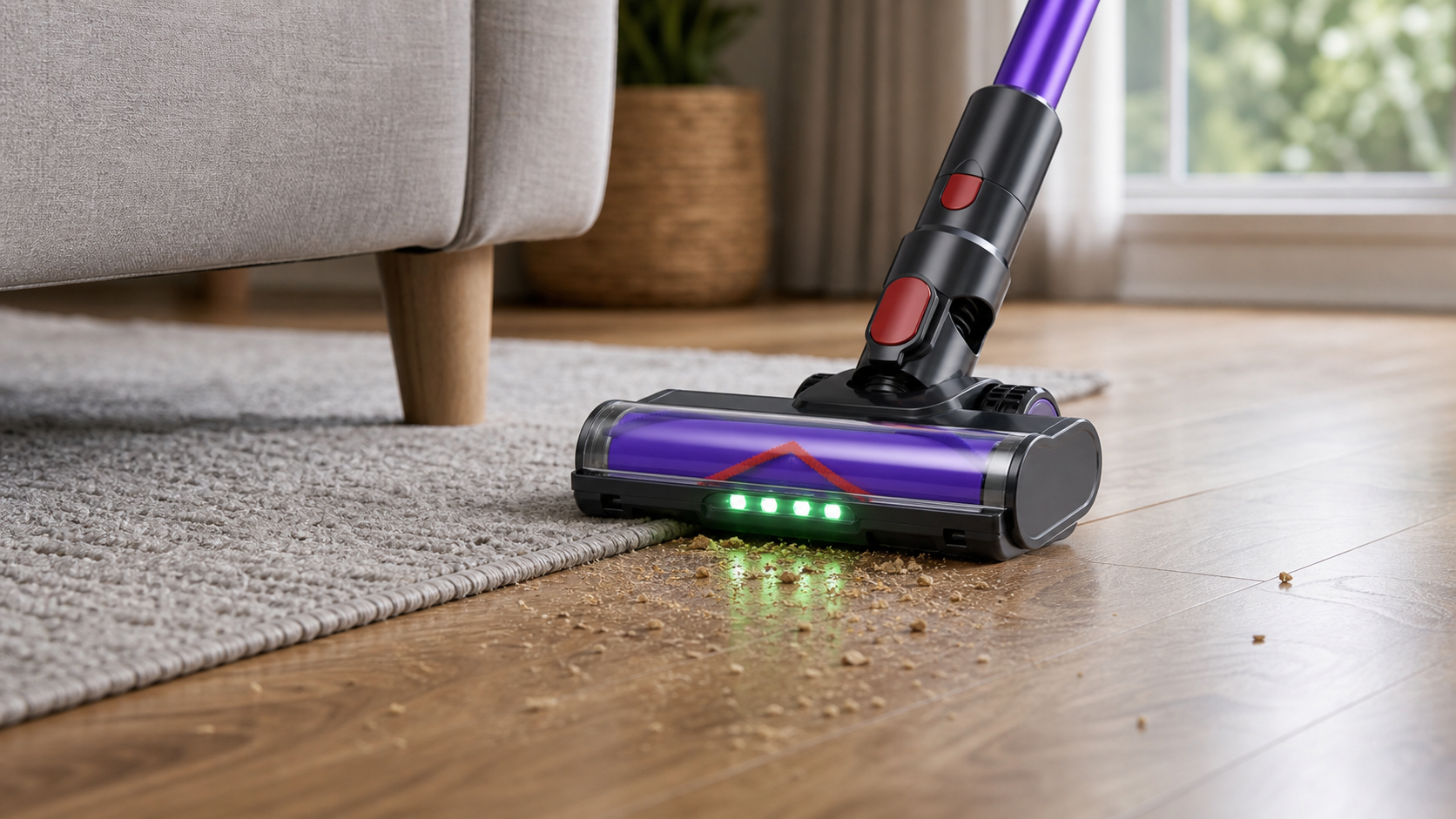 Suction, brush design and floor type all work together in real cleaning.
3. Understand Battery Life in Real Use
Battery life is another key part of how to choose a cordless vacuum cleaner. Published runtime can be helpful, but it often refers to a lower power mode under specific conditions. Runtime may be shorter when using higher suction, motorised brush heads or attachments that require more power.
Instead of looking only at the maximum number, think about your normal cleaning session. If you usually clean one or two rooms at a time, a shorter runtime may be enough. If you prefer to clean the whole home in one go, runtime and charging convenience become more important.
Check:
- the advertised maximum runtime;
- whether the brand explains runtime in different modes;
- how long the battery takes to recharge;
- whether the battery is removable or replaceable;
- where the charger needs to be placed; and
- whether the display shows remaining battery clearly.
A stated runtime of up to 55 minutes, for example, can be useful for many routine cleaning sessions, but actual use will depend on suction mode, floor surface, attachments and battery condition. Treat runtime as a guide, not a guarantee for every setting.
4. Choose a Weight You Can Use Comfortably
Many cordless vacuums are described as lightweight, but the number on the specification sheet does not tell the whole story. Balance matters as much as total weight.
With a cordless stick vacuum, the motor, battery and dust container are often held near your hand. This can make the vacuum easy to steer on the floor, but it may feel top-heavy when cleaning stairs, curtains, shelves or the car. A model that feels fine for two minutes may become uncomfortable during a longer session.
When possible, consider:
- total product weight;
- weight distribution in the hand;
- whether the handle is comfortable to grip;
- whether controls are easy to reach;
- how the vacuum feels when lifted above the floor; and
- whether a shorter handheld mode is available.
This point is especially important for older users or anyone who wants a simpler, less tiring cleaning routine. A cordless vacuum should make cleaning easier to start, not harder to finish.
5. Match the Vacuum to Your Floor Types
Floor type has a big effect on which cordless vacuum cleaner will suit your home. Hard floors, low-pile carpets, thicker carpets and rugs all create different cleaning demands.
For hard floors, you may want a floor head that picks up fine dust without scattering larger crumbs. For carpets, brush design and suction strength become more important. For rugs, the vacuum should clean effectively without pulling the rug around or making movement difficult.
If your home has mixed flooring, look for:
- adjustable suction modes;
- a floor head that moves smoothly between surfaces;
- a brush roll that can handle hair and fibres;
- good edge cleaning for walls and furniture; and
- attachments for corners, upholstery and stairs.
No cordless vacuum is equally perfect on every surface. The aim is to choose one that performs well on the floors you clean most often.
6. Think About Stairs, Sofas and Above-Floor Cleaning
A good cordless vacuum is not only for open floor space. Many people choose one because it can handle smaller jobs that feel awkward with a traditional plug-in vacuum.
If you regularly clean stairs, sofas, mattresses, car seats or corners, check whether the model can convert into a handheld vacuum and whether the included attachments are genuinely useful.
Useful tools may include:
- a crevice tool for narrow gaps;
- a brush attachment for upholstery and shelves;
- a motorised or compact tool for stairs;
- a flexible tube for reaching beneath furniture; and
- a simple release system for switching attachments.
Accessories should make the vacuum easier to use, not harder to store. A small number of well-designed tools is often more useful than a large set of attachments that rarely leave the box.
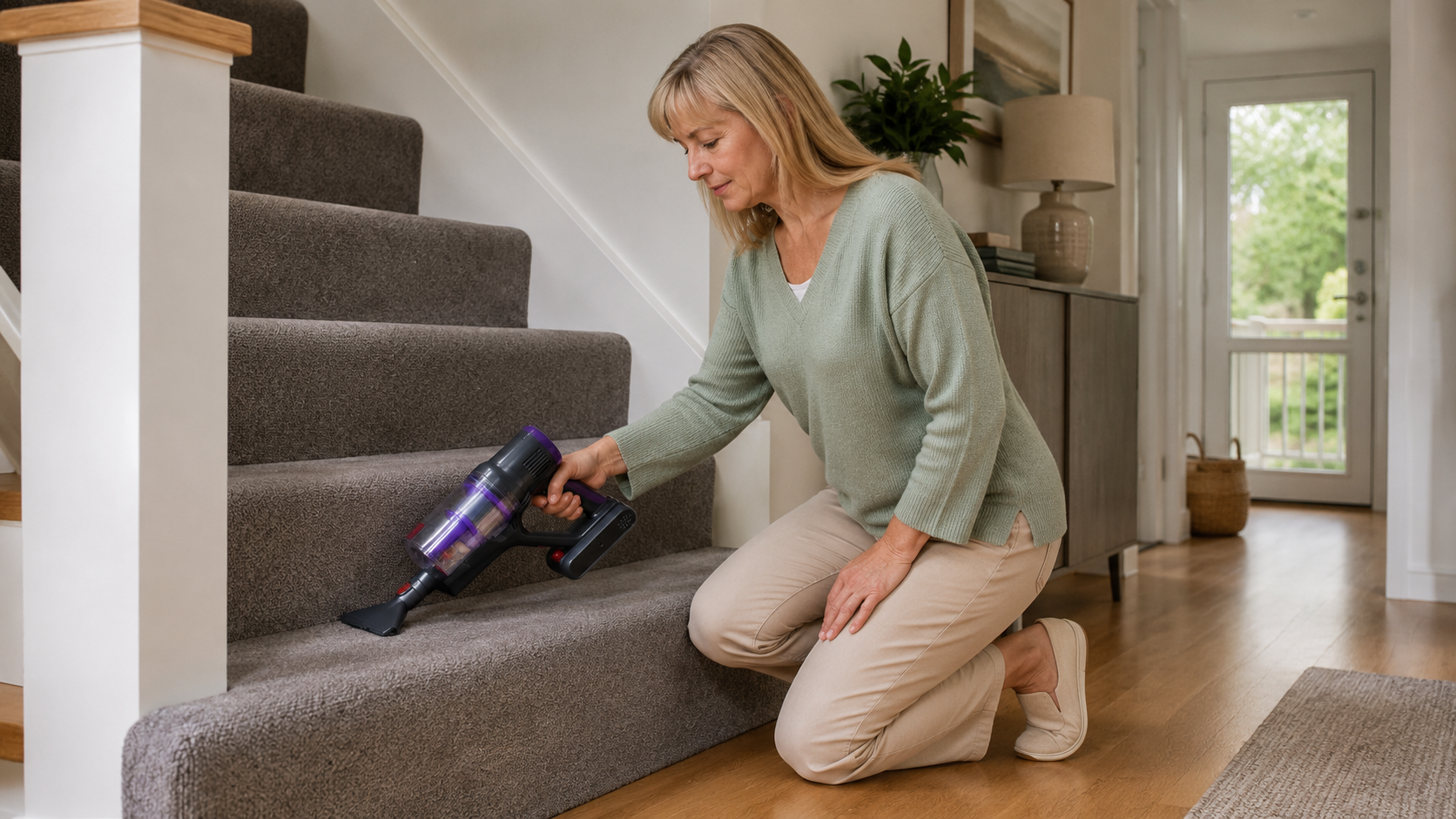 Check whether the included tools suit sofas, stairs and above-floor cleaning.
7. Look at Dust Bin Size and Emptying
Dust bin size affects convenience. A small dust container may be lighter and slimmer, but it can require more frequent emptying. A larger bin may suit homes with pets, carpets or more frequent cleaning, but it can add bulk to the machine.
When comparing cordless vacuum cleaners, check:
- stated dust bin capacity;
- how easy the bin is to remove;
- whether the emptying mechanism releases dust cleanly;
- whether fine dust gets trapped around seals or hinges; and
- whether the container can be cleaned properly.
This is one area where practical design matters. A vacuum that is easy to empty is more likely to be maintained correctly, which helps preserve airflow and suction over time.
8. Check Filter Care and Brush Maintenance
Every vacuum cleaner needs maintenance. A cordless model is no exception. Filters, brush rolls and airways need regular attention if you want the vacuum to keep working well.
Before buying, find out:
- whether the filter is washable or replaceable;
- how often the filter should be cleaned;
- whether washable parts must dry fully before use;
- how easy it is to remove hair from the brush roll;
- whether replacement filters or parts are available; and
- whether the user manual gives clear care instructions.
This matters because reduced suction is not always caused by a weak motor or a fading battery. A full bin, dirty filter, blocked airway or tangled brush can all reduce performance.
If you have pets or long hair in the home, brush maintenance should be one of your main buying checks.
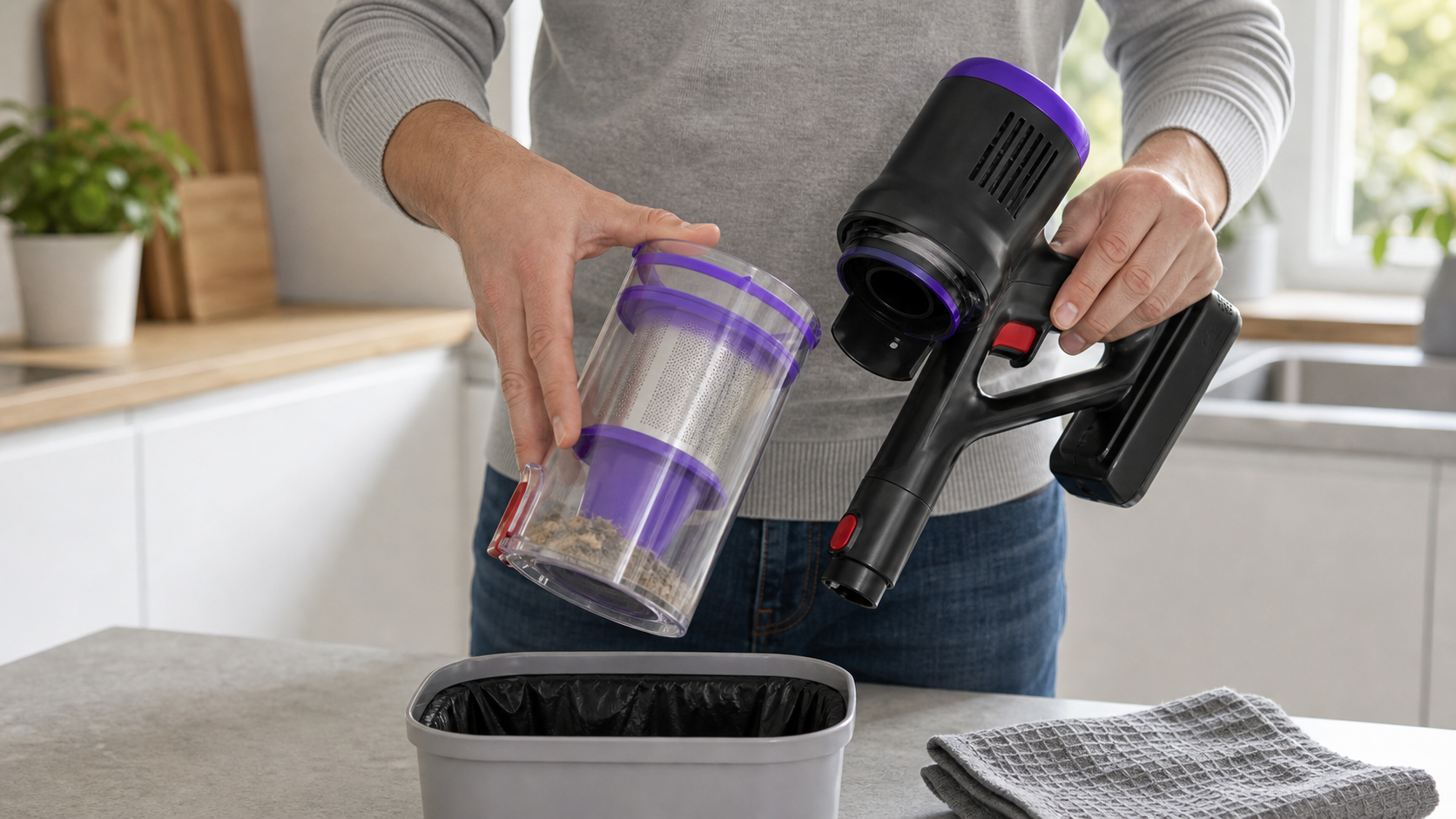 A simple emptying mechanism makes routine maintenance easier to keep up with.
9. Plan Charging and Storage Before You Buy
Storage is easy to overlook, but it affects how often you use the vacuum. A cordless vacuum that is easy to reach is more likely to be used for quick clean-ups.
Before choosing a model, decide where it will live. Think about whether you have a suitable wall, a nearby socket, enough clearance for the vacuum's height and a place to keep attachments.
Look for:
- a charging position that fits your routine;
- wall-mount or compact storage options;
- secure attachment storage;
- a cable length that reaches comfortably;
- a stable resting position if wall mounting is not practical; and
- a design that does not take up unnecessary floor space.
For apartments and smaller homes, storage can be just as important as suction. A slim vacuum with a clear charging place may be more useful than a bulky machine hidden away in a cupboard.
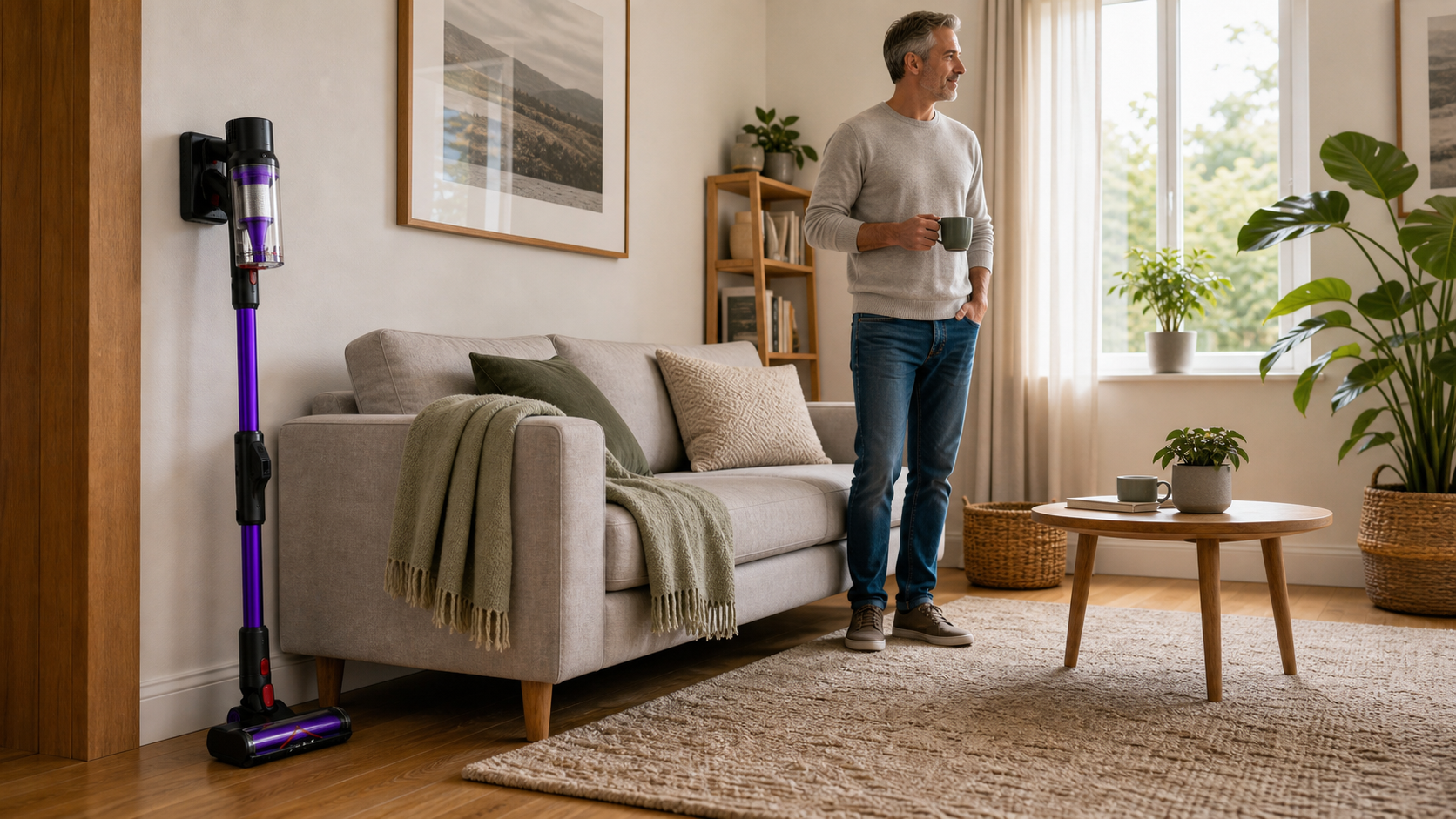
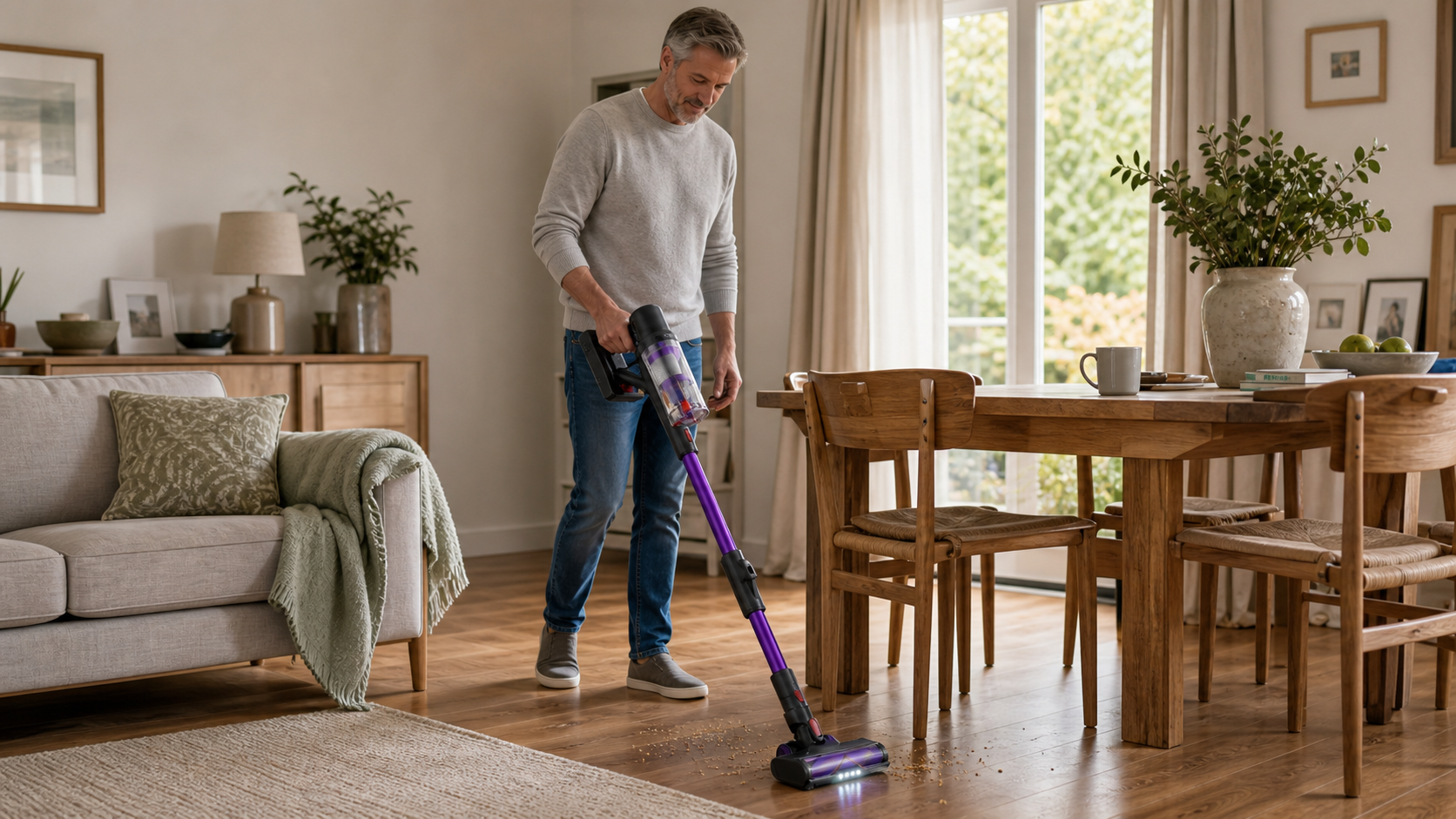 A vacuum that is easy to reach is more likely to be used for small everyday clean-ups.
10. Compare Noise, Controls and Everyday Ease of Use
Small details can change how a cordless vacuum feels in daily use. Noise level, trigger style, display clarity and button placement may not sound exciting, but they can affect whether the vacuum feels pleasant or frustrating.
Consider:
- whether the controls are simple and clear;
- whether you need to hold a trigger continuously;
- whether the display shows battery or mode information;
- whether the dust bin opens without awkward handling;
- whether the vacuum can reach under beds and sofas; and
- whether the floor head turns easily around furniture.
For many households, the best cordless vacuum cleaner is the one that removes friction from ordinary cleaning. If a product is powerful but awkward, it may not be the one you reach for first.
11. Check Warranty, Support and Replacement Parts
A cordless vacuum cleaner includes parts that may need care or replacement over time, including filters, brush rolls and battery-related components. Clear support can make ownership easier after the first few weeks.
Before buying, check:
- warranty length and coverage;
- how to contact support;
- whether replacement filters are available;
- whether key parts can be replaced;
- whether the product page includes clear specifications; and
- whether the seller provides practical guidance after purchase.
This is especially important when comparing a cheaper model with a more complete option. A lower price is less attractive if replacement parts are hard to find or support is unclear.
12. When a Cordless Vacuum May Not Be the Right Choice
A cordless vacuum is convenient, but it is not automatically the best answer for every home. It may not be ideal if you regularly clean for very long periods without breaks, need heavy-duty cleaning for large areas or prefer a cylinder design where the main motor stays on the floor.
You may also prefer a plug-in vacuum if you do not have a practical charging position or if you dislike managing battery runtime.
That does not make cordless vacuums a poor choice. It simply means the decision should match your routine. Many households use a cordless vacuum for daily maintenance and a plug-in machine for occasional deep cleaning. Others find that one capable cordless model covers nearly all routine cleaning.
13. How the SIXPAD S80 Fits into This Buying Checklist
If you are comparing cordless models, the SIXPAD S80 cordless vacuum cleaner is an example of a design focused on flexible everyday cleaning. It combines a rechargeable stick format with a foldable tube, wall-mount storage option and a stated runtime of up to 55 minutes.
The foldable tube may be useful for reaching beneath furniture, while the stick and handheld formats can help with floors, stairs and above-floor jobs. As with any cordless vacuum, the right fit depends on your floor types, preferred suction mode, cleaning session length and comfort with the in-hand weight.
For a multi-store setup, replace the product link above with the correct local product page for each store before publishing.
Quick Cordless Vacuum Buying Checklist
Use this checklist before making a final decision.
|
Buying factor |
What to check |
Why it matters |
|
Suction power |
kPa, watts, airflow claims and suction modes |
Helps judge cleaning potential, but should be considered with floor-head design |
|
Battery life |
Runtime in different modes and charging time |
Determines whether the vacuum suits quick cleans or longer sessions |
|
Weight |
Total weight and balance in the hand |
Affects comfort on stairs, sofas and above-floor cleaning |
|
Floor type |
Hard floors, carpets, rugs or mixed flooring |
Helps you choose the right brush and suction style |
|
Dust bin |
Capacity and emptying design |
Affects convenience and how often you need to empty it |
|
Filters |
Washable or replaceable filter care |
Helps maintain suction and airflow over time |
|
Storage |
Wall mount, charging position and attachment storage |
Makes the vacuum easier to keep ready for use |
|
Support |
Warranty, replacement parts and clear product information |
Reduces ownership problems after purchase |
Frequently Asked Questions
What should I look for when choosing a cordless vacuum cleaner?
Look for suction power, realistic battery life, comfortable weight, suitable floor-head design, dust bin capacity, filter care, storage options and clear warranty support. The best choice is the one that fits your home and cleaning routine.
How much suction power does a cordless vacuum need?
There is no single number that suits every home. Higher suction can help with carpets and heavier dirt, but floor-head design, airflow, brush quality and clean filters also affect performance.
How long should a cordless vacuum battery last?
Battery life depends on the model and suction mode. Maximum advertised runtime is often achieved on a lower setting, while higher power modes usually use the battery faster. Compare mode-specific information where possible.
Are cordless vacuums good for carpets and hard floors?
Many cordless vacuums are designed for both, but performance depends on the floor head, brush roll, suction mode and carpet type. If your home has mixed flooring, look for adjustable settings and a floor head that moves smoothly between surfaces.
Is a lightweight cordless vacuum always better?
Not always. A lighter vacuum may be easier to carry, but balance, handle comfort and floor-head movement also matter. A slightly heavier model with better balance may feel easier to use than a lighter model that feels awkward.
How often should I clean the filter on a cordless vacuum?
Follow the manufacturer's instructions. Many filters need regular cleaning, and washable filters must be fully dry before being refitted. A dirty filter can reduce suction and airflow.
Final Thoughts
Learning how to choose a cordless vacuum cleaner is mostly about matching the product to real life. Strong specifications are useful, but comfort, storage, floor type, maintenance and charging convenience are what decide whether a vacuum becomes part of your routine.
Start with the way you clean. Then compare suction, battery life, weight, floor-head design, dust bin size, filter care and support. A cordless vacuum cleaner that is easy to reach, comfortable to use and simple to maintain is more valuable than one chosen only for the biggest number on the product page.