
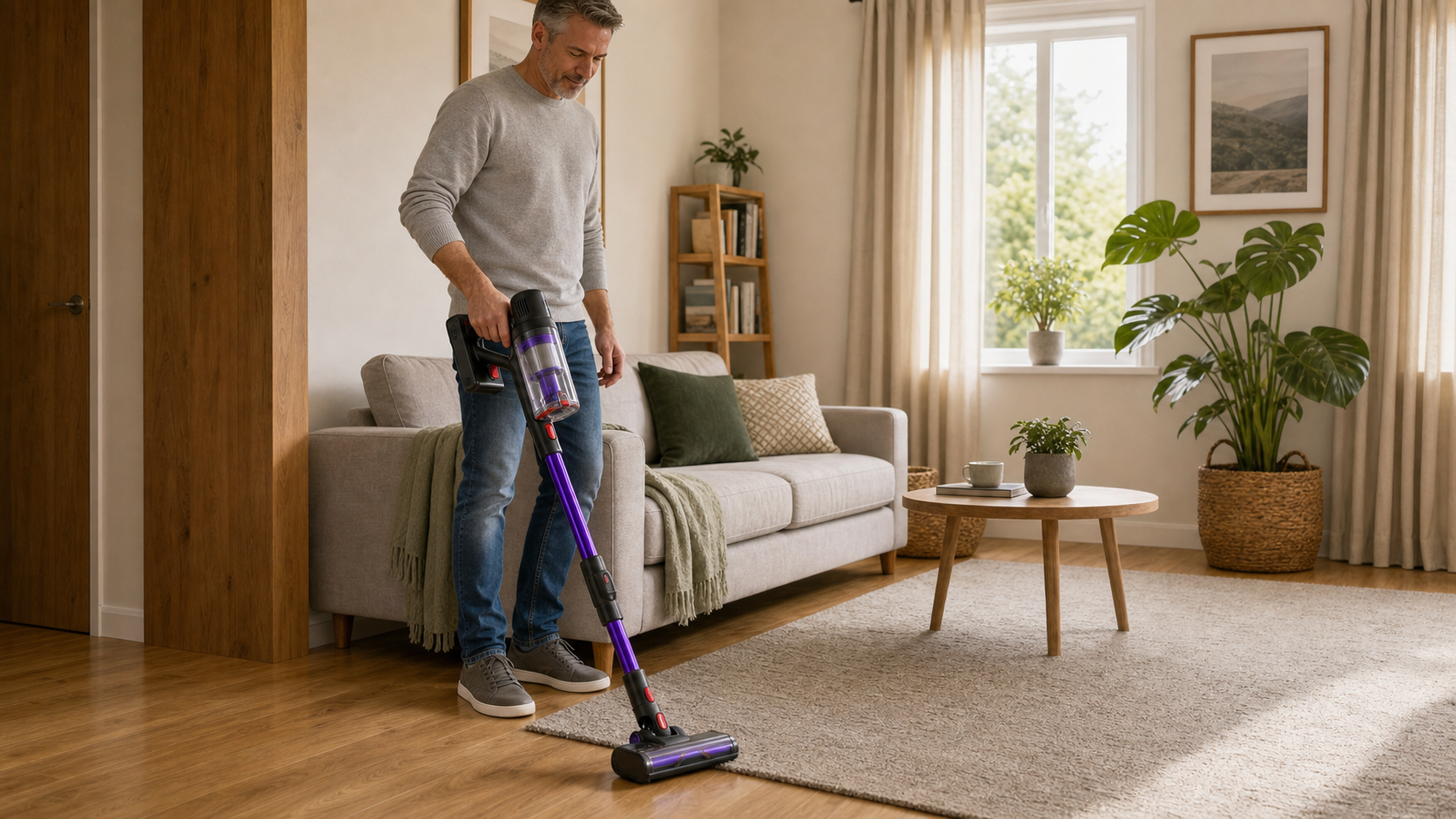
A cordless vacuum cleaner can work on carpets, hard floors and stairs, but the results depend on the design of the vacuum, the cleaning head and how you use it. For many homes, the main benefit is not simply removing the cable. It is the ability to move from room to room, clean small messes quickly and switch between floor cleaning and handheld cleaning without much setup.
If your home has a mix of carpet, hard flooring, rugs, stairs and upholstery, a cordless vacuum can be a practical everyday cleaner. The key is choosing a model that is strong enough for floor cleaning, light enough to handle comfortably and flexible enough to reach corners, steps and sofa edges.
1. Can a Cordless Vacuum Cleaner Clean Carpets?
Yes, a cordless vacuum cleaner can clean carpets, especially low-pile and medium-pile carpets. On carpets, suction power matters, but the floor head is just as important. A good floor head helps lift dust, crumbs and hair from the carpet surface instead of only pulling loose debris from the top.
For best results on carpet, move the vacuum more slowly than you would on hard floors. This gives the floor head more time to loosen dust from the fibres. If your vacuum has different power levels, a stronger mode can be useful for carpeted areas, rugs and heavier debris.
Cordless vacuums are especially helpful for quick carpet clean-ups, such as crumbs near the sofa, dust in the hallway or pet hair in commonly used areas. For very thick carpets or deep weekly cleaning, you may still want to check that the vacuum has enough suction and a suitable brush head before relying on it as your only cleaner.
2. Can a Cordless Vacuum Cleaner Clean Hard Floors?
Hard floors are one of the easiest places to use a cordless vacuum cleaner. Wood, laminate, vinyl and tile floors usually need steady suction and a floor head that can collect dust without pushing crumbs around.
A cordless vacuum is useful on hard floors because it is quick to pick up and move around furniture. There is no cable to drag behind you, and you can clean the kitchen, dining area or hallway without switching sockets.
When cleaning hard floors, avoid rushing. A steady pass helps the vacuum collect fine dust and larger crumbs more cleanly. It is also worth checking the floor head design, especially if your home has delicate flooring. A smooth-moving floor head can make daily cleaning feel much easier.
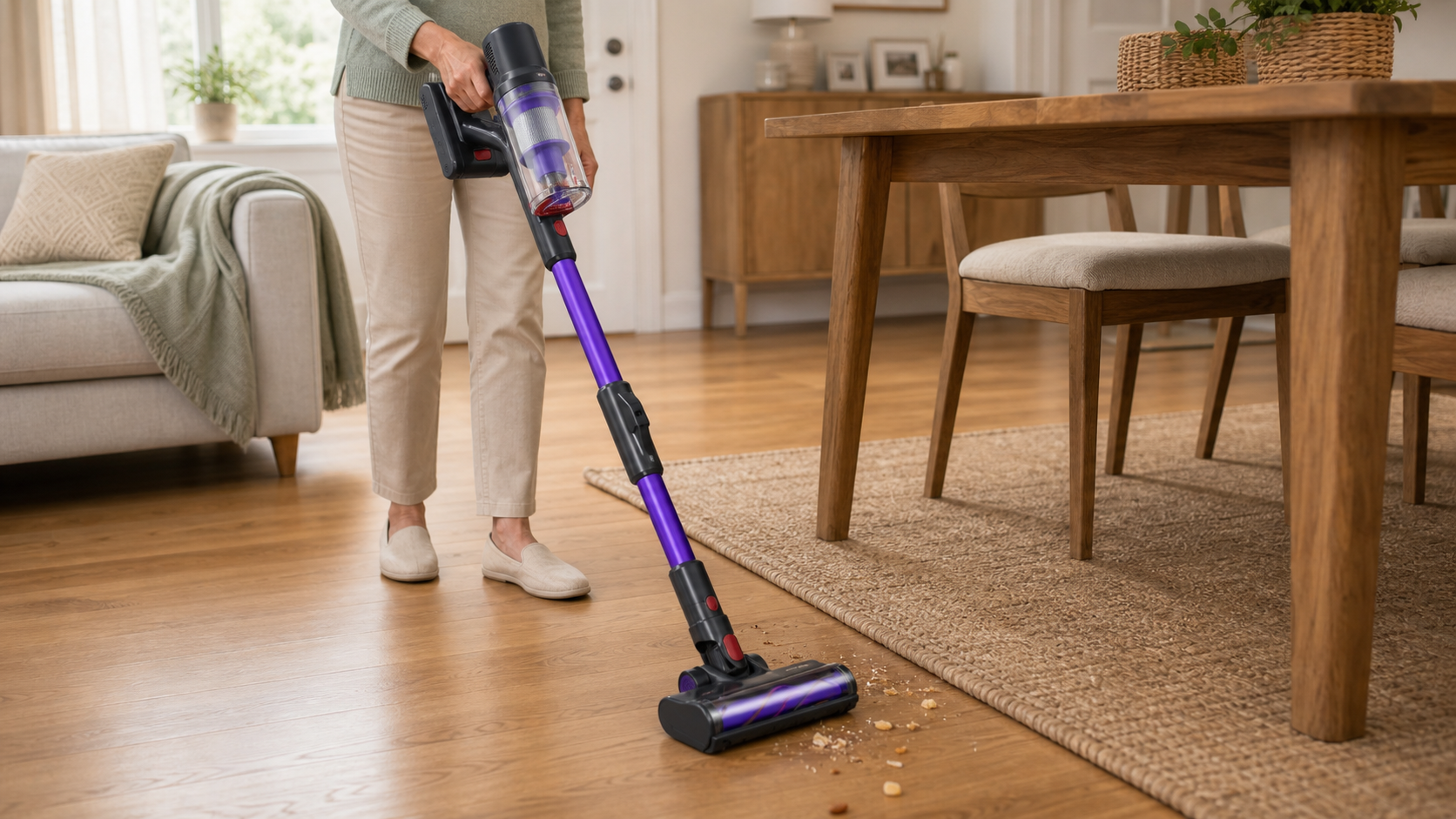 Caption: On hard floors, steady movement helps collect crumbs and dust near furniture edges.
3. Can a Cordless Vacuum Cleaner Clean Stairs?
Yes, and this is where cordless vacuums are often more convenient than traditional corded models. Stairs can be awkward to clean with a large vacuum body and a power cable. A cordless vacuum removes much of that problem because you are not tied to a socket while moving up and down.
For stairs, handheld mode is usually the most practical option. By removing the long tube and using a smaller attachment, you can clean each step with better control. This is useful for carpeted stairs, stair corners and edges where dust often gathers.
A lightweight design also matters. If a vacuum is too heavy or poorly balanced, stair cleaning can quickly become uncomfortable. For older users or anyone who wants easier everyday cleaning, weight and grip comfort are worth considering alongside suction power.
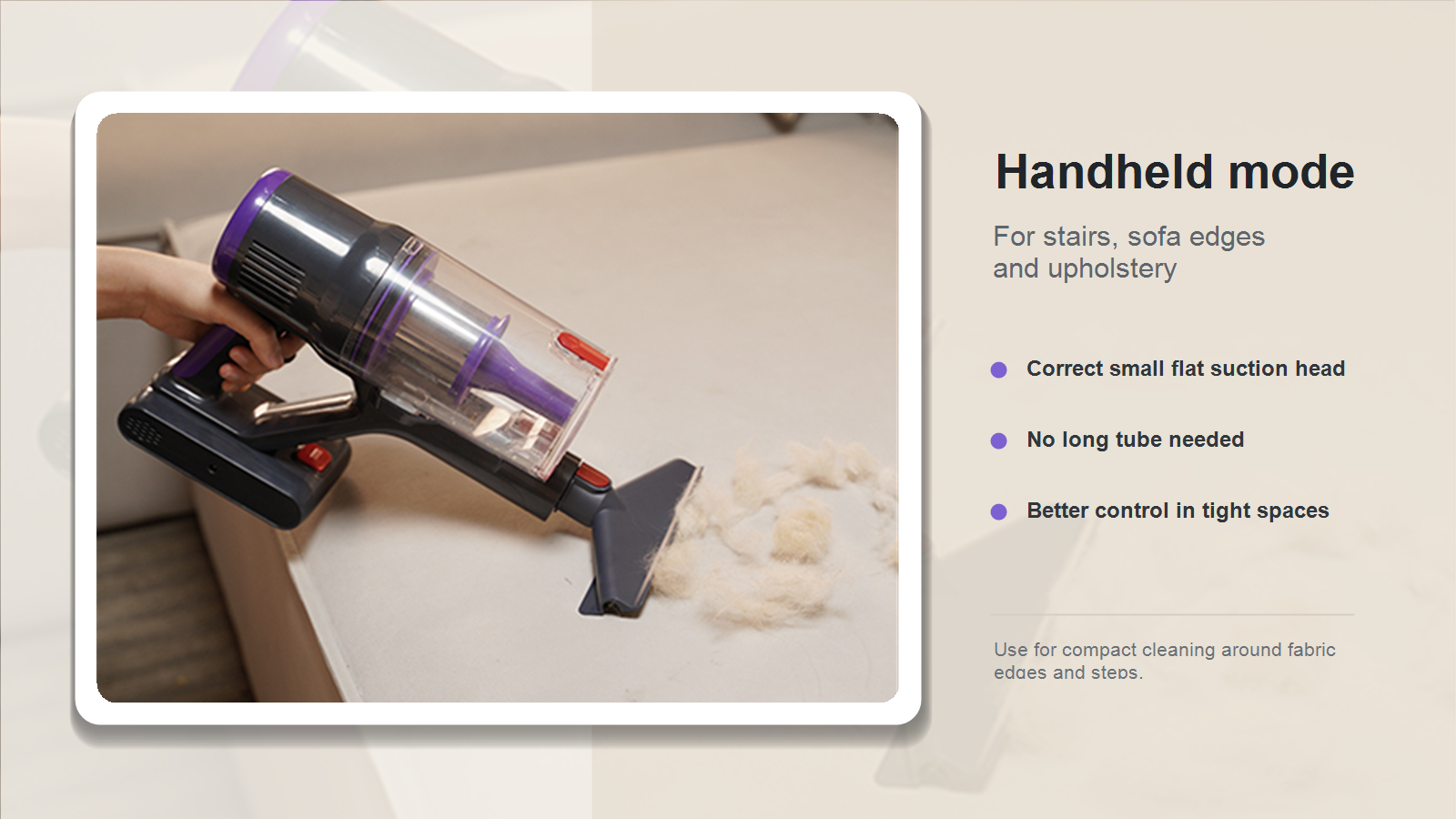 Caption: Handheld mode helps with stairs, sofa edges, upholstery and compact clean-ups.
4. Why Attachments Matter
Attachments decide how useful a cordless vacuum feels beyond open floors. A main floor head is best for larger areas, while a smaller flat suction head can help with stairs, sofa edges, upholstery, car seats and narrow spaces.
This is one reason a cordless vacuum should not be judged only by suction numbers. A powerful vacuum with the wrong attachment can still feel awkward in tight spaces. A practical setup should let you move between floor mode and handheld mode without complicated steps.
For example, the SIXPAD S80 is designed as a cordless vacuum that can switch between standard floor cleaning and handheld use. This makes it more suitable for homes where cleaning is not limited to one type of floor.
5. What to Check Before Choosing a Cordless Vacuum
Before choosing a cordless vacuum cleaner for carpets, hard floors and stairs, look at a few practical details:
Battery life: Make sure the runtime fits the size of your home and the way you clean.
Weight: A lighter vacuum is easier to carry upstairs and use in handheld mode.
Floor head: Check whether it is suitable for both carpet and hard flooring.
Attachments: Look for tools that can handle stairs, sofas and edges.
Storage: A wall-mount or compact storage option can make the vacuum easier to keep ready for daily use.
Maintenance: A removable dust cup and washable filter can make long-term use simpler.
Final Thoughts
A cordless vacuum cleaner can work well on carpets, hard floors and stairs if it has the right balance of suction, floor head design, battery life and handheld flexibility. It may not be only about replacing a corded vacuum. For many households, the real advantage is convenience: quick clean-ups, easier stair cleaning and less setup between rooms.
If your home has mixed flooring, rugs, stairs and furniture edges to clean, a cordless model such as the SIXPAD S80 can be a practical choice for everyday maintenance. The best results come from matching the cleaning mode to the surface: floor mode for larger areas, stronger suction for carpets and handheld mode for stairs and upholstery.