
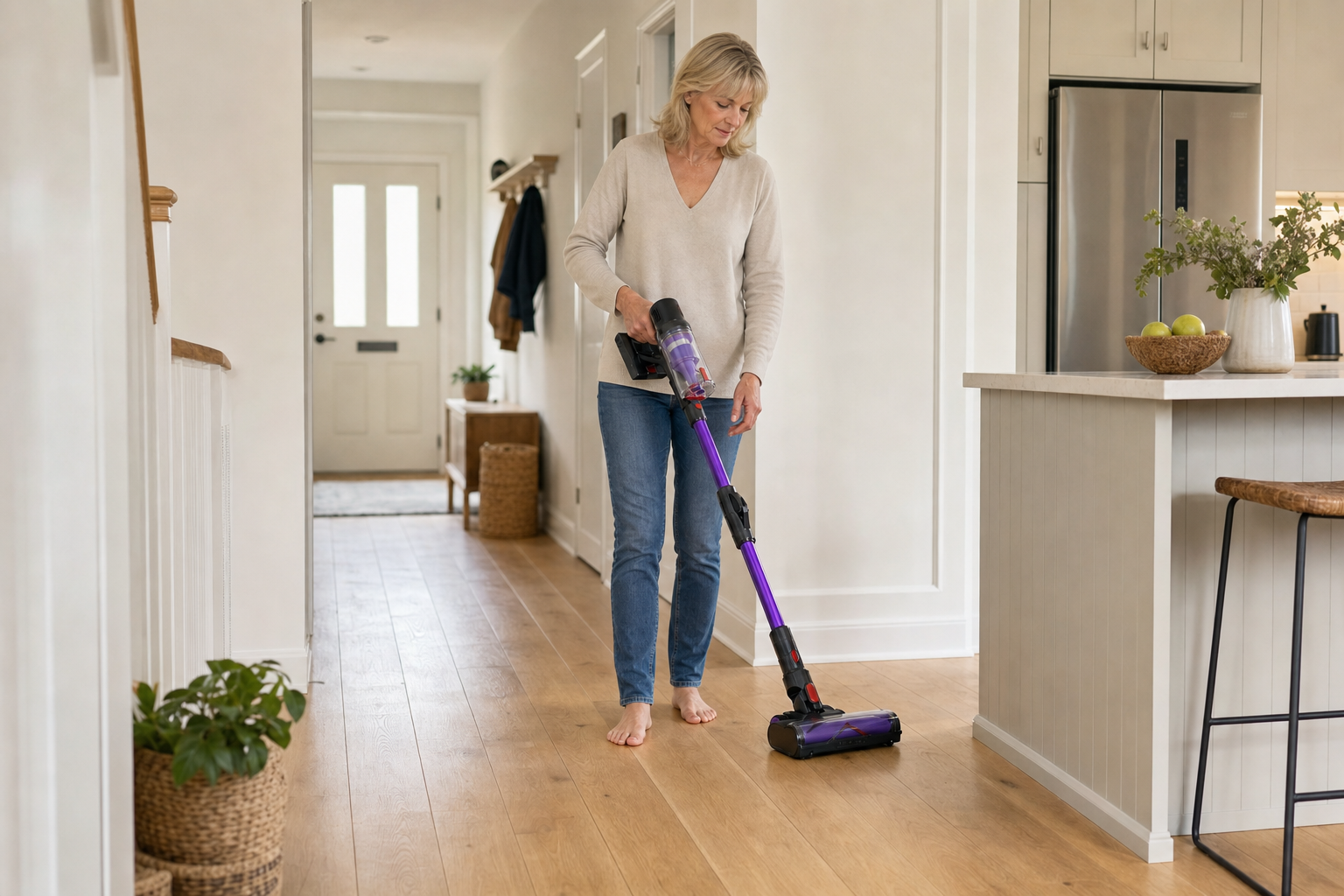
Learning how to vacuum hard floors without scratching them starts with one simple idea: remove grit without dragging it across the surface.
Fine sand, tiny stones and other hard particles can enter a home on shoes, shopping bags or pet paws. If one becomes trapped beneath a wheel or the edge of a floor head, it may be pulled across the finish. The risk is often linked to the trapped particle, a damaged tool or unsuitable technique rather than vacuuming itself.
A careful routine can help on sealed wood, engineered wood, laminate, vinyl, linoleum, tile and stone. However, floors vary, so check the flooring manufacturer's care instructions before using a powered brush roll or any unfamiliar attachment.
Why Hard Floors Can Develop Fine Marks
Hard flooring looks smooth, but its surface can still collect abrasive dust and grit. These particles are most common near entrances, kitchen walkways and doors leading outside. They can also settle in gaps between boards or along skirting boards.
The floor head should move freely and remain flat. A jammed wheel, rough edge, trapped stone or sharp piece of debris can create more risk than ordinary dry dust.
Marks may also come from furniture, footwear, pets or existing damage, so stop and investigate if you notice a new sound or line. Do not assume that increasing suction or pressing harder will solve the problem.
Before You Vacuum a Hard Floor
Check the Flooring Care Instructions
Start with the advice supplied by the flooring manufacturer or installer. Some sealed surfaces tolerate a powered brush roll, while delicate finishes, specialist wood, natural stone or damaged floors may need a different head or a gentler method.
If the guidance is unclear, test your vacuum on a small, inconspicuous area before cleaning the whole room.
Remove Large, Sharp or Wet Debris
Pick up coins, pins, broken fragments, large stones and other objects that could catch beneath the floor head. Deal with liquid spills using the method recommended for the floor.
Do not use a dry-only vacuum to collect liquid or damp debris. The SIXPAD S80 is intended for dry vacuuming, so the floor should be dry before you begin.
Check the Floor Head and Wheels
With the vacuum switched off, look at the floor head, visible wheels, front edge and brush roll. Remove any trapped grit, thread or hair according to the vacuum's maintenance instructions. Check that the wheels can move freely and that no rough or damaged edge is touching the floor.
Use a clean, dry cloth for accessible exterior surfaces. Avoid water near electrical parts and do not force or dismantle components that are not designed for user removal.
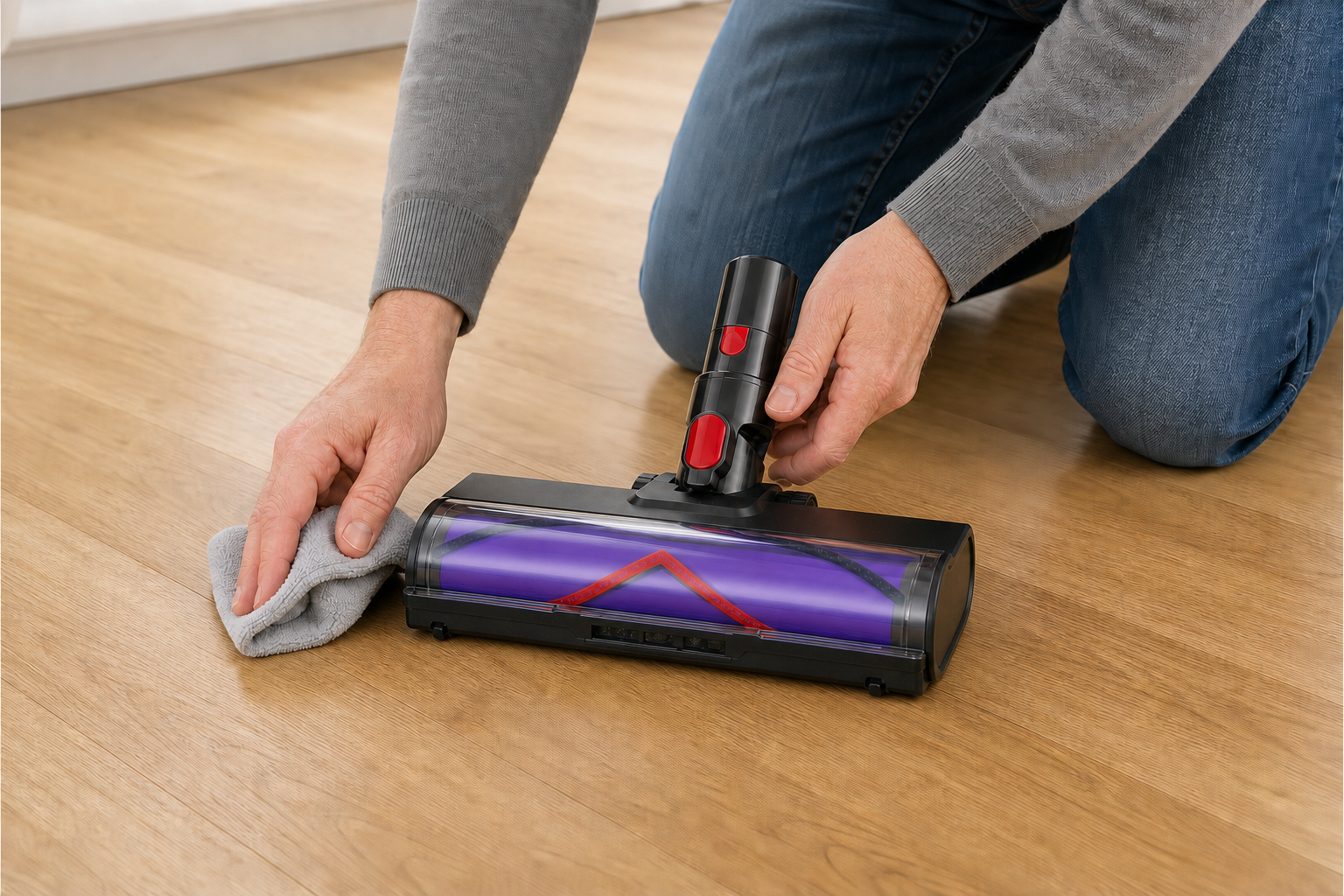 Check the floor head regularly for particles that could be dragged across the floor.
Check the Dust Cup and Filter
An overfilled dust cup or restricted filter does not directly scratch a floor, but it can reduce airflow and encourage repeated passes. Empty the dust cup before it becomes tightly packed and maintain the filter as described in the product instructions.
How to Vacuum Hard Floors Safely
1. Choose a Suitable Head or Setting
Use a floor head or attachment supplied or approved for your vacuum and suitable for the surface. If the vacuum has adjustable power, begin with a normal or lower setting and increase it only if the debris needs more help.
Do not assume that the strongest mode is best. The aim is controlled pickup, not maximum resistance against the floor.
2. Start at the Furthest Point
Begin at the far side of the room and work towards the exit. This creates a simple route and reduces the need to walk repeatedly over the area you have just cleaned.
3. Keep the Floor Head Flat
Let the floor head rest naturally on the surface and keep the tube at a comfortable angle. There is no need to press down.
Avoid dragging the head sideways or twisting it sharply while it is loaded with debris. Turn smoothly, then continue in a straight line.
4. Use Slow, Straight, Overlapping Passes
Move forward at a steady pace, then draw the vacuum back over the same route. Shift the head slightly to the side and overlap the next pass. A methodical pattern helps you cover the room without repeatedly crossing the same area.
You do not need to move unusually slowly. The goal is to give the floor head enough time to collect dry dust and grit before you turn or change direction.
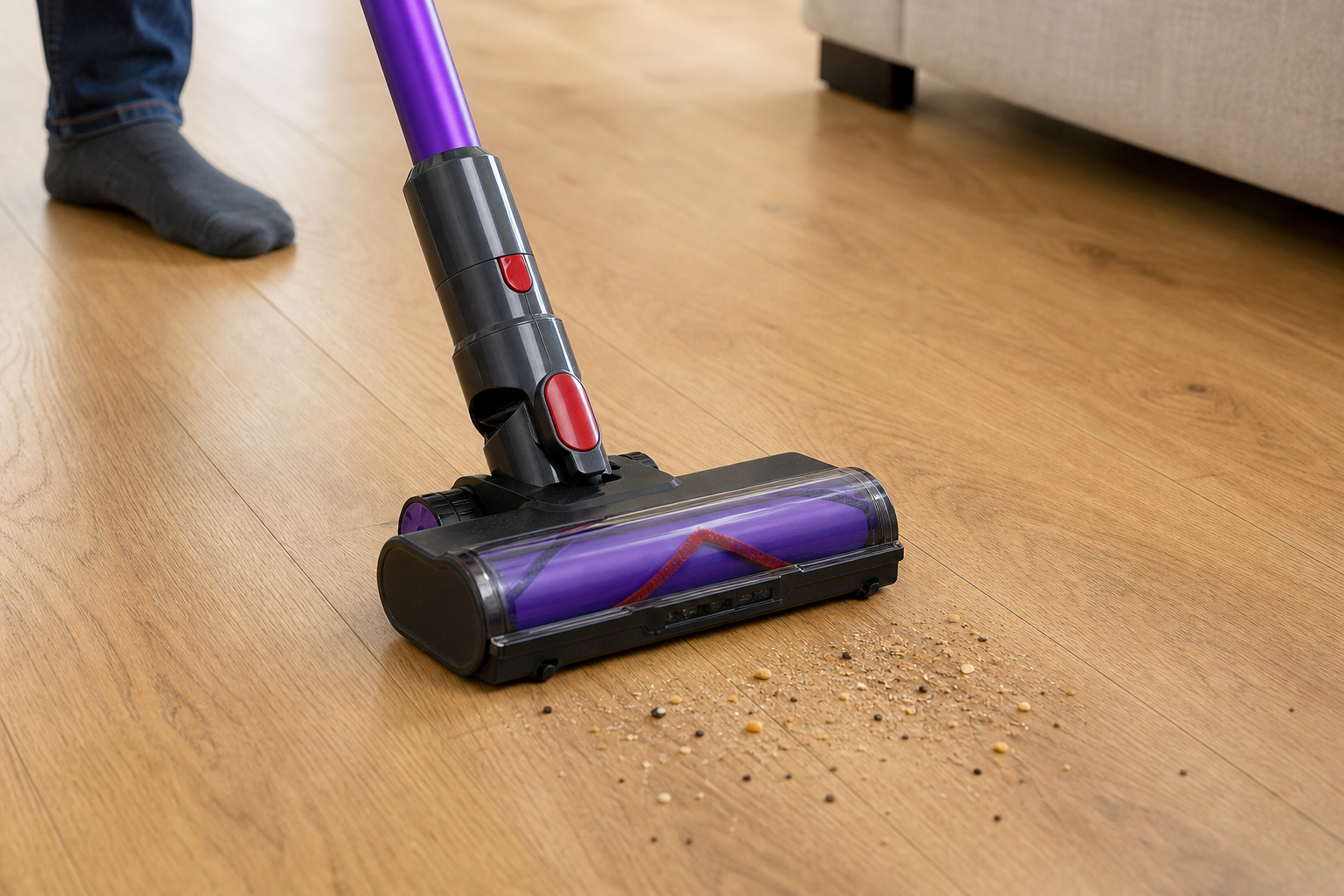 Collecting grit before it is dragged across the surface can help reduce the risk of fine marks.
5. Take Care Around Edges and Furniture
Guide the floor head gently beside skirting boards, chair legs and cabinets. Do not knock the head repeatedly against furniture or force it into a narrow gap.
For spaces the main head cannot reach, use an appropriate supplied or approved attachment. Pick up any sharp object by hand rather than trying to pull it from a corner with the vacuum.
6. Stop if You Hear Scraping or Clicking
A new scraping, clicking or grinding sound is a reason to stop immediately. Switch the vacuum off and check the floor head, wheels and surrounding floor for trapped debris.
Continuing to push the vacuum may drag the object further. Resume only when the obstruction has been removed and the head moves normally.
7. Check the Floor in Good Light
When you finish, look across the floor from more than one angle. Side light can reveal remaining grit, dust along edges or an existing mark that was difficult to see before cleaning. Repeat only the areas that still need attention.
Adjust the Method for Different Hard Floors
Sealed Wood and Engineered Wood
Wood finishes can vary considerably. Remove grit promptly, keep the floor dry and avoid pressing or dragging the head. Follow the manufacturer's advice on powered brush rolls, because a setting suitable for one finish may not be recommended for another.
Laminate
Laminate is straightforward to vacuum when it is dry and in good condition. Pay particular attention to grit near entrances and particles trapped along board joints. Avoid wet debris and stop if a loose edge or damaged section catches the head.
Vinyl and Linoleum
These floors are often easy to maintain, but sharp grit and damaged wheels can still leave marks. Keep the floor head flat, use a steady pace and avoid twisting the vacuum sharply in one place.
Tile and Stone
Vacuum across tiles slowly enough to collect debris from grout lines and textured areas. Natural stone and specialist finishes may have their own restrictions, so check the care guidance before using a rotating brush or a new attachment.
How Often Should You Vacuum Hard Floors?
There is no single schedule for every home. Entrances, kitchens and routes between rooms often collect grit more quickly and may benefit from several light cleans each week. Lower-use rooms may need less frequent attention.
Homes with pets, children, outdoor access or nearby building work may need a more regular routine. It is usually better to remove a small amount of grit early than wait until it has been walked across the floor many times.
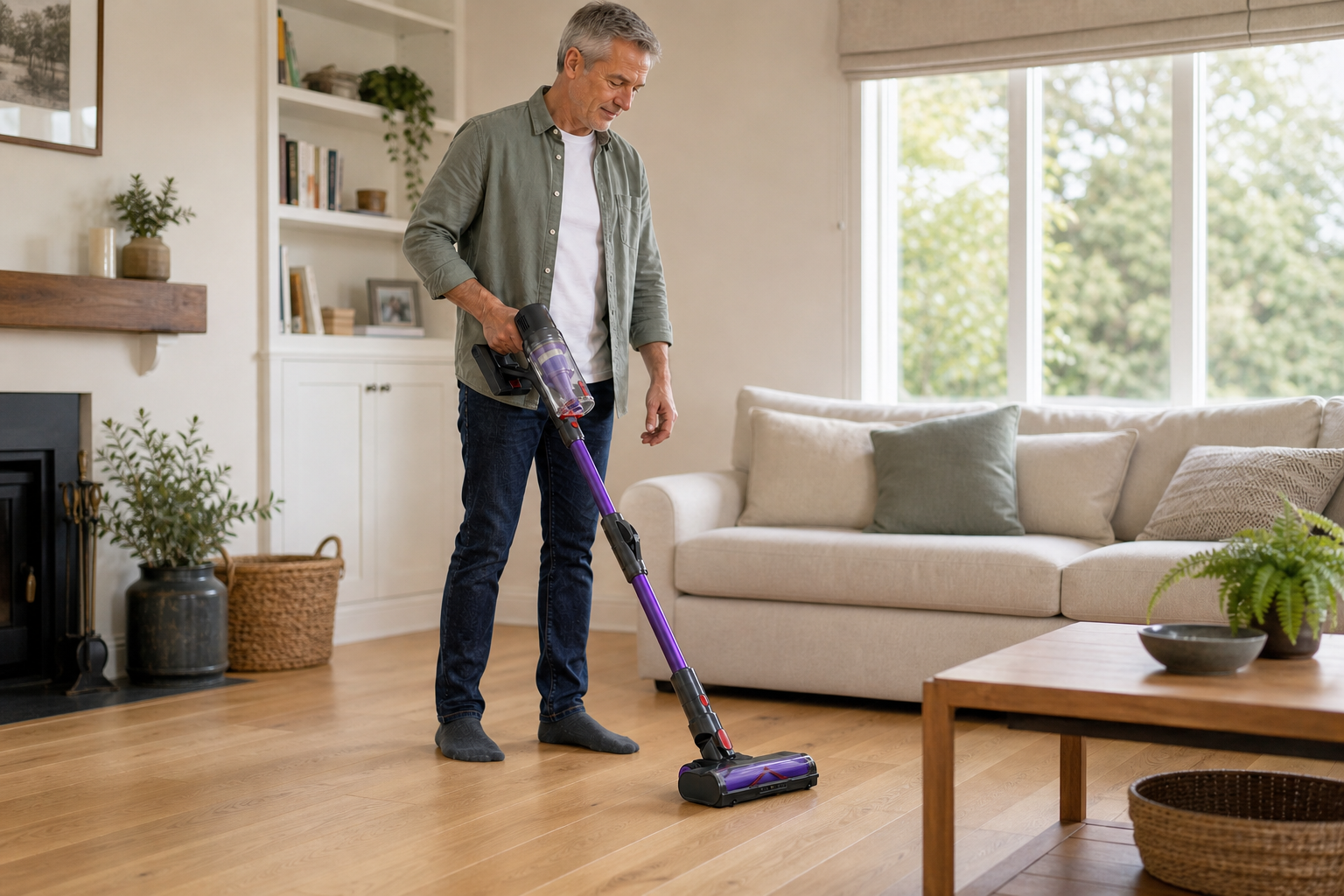 Entrances and busy walkways often benefit from more frequent light cleaning.
Common Hard-Floor Vacuuming Mistakes
Running the floor head over coins, pins, stones or broken fragments
Ignoring grit trapped around the front edge, roller or wheels
Pressing down or dragging the floor head sideways
Using maximum power automatically for every surface
Forcing an unsuitable powered brush across a delicate finish
Continuing after a new scraping, clicking or grinding sound begins
Vacuuming liquid or damp debris with a dry-only vacuum
Assuming the same method is suitable for every wood, laminate, vinyl, tile or stone floor
Using a Cordless Vacuum on Hard Floors
A cordless vacuum can be useful for frequent light cleaning because it can move between entrances, kitchens and living areas without a cable. This makes it easier to collect grit soon after it appears instead of leaving it until a larger weekly clean.
Convenience does not replace preparation. Check the floor head, choose a suitable setting and keep the surface dry. Regular dust-cup, filter and brush-roll maintenance also helps the vacuum collect debris efficiently without unnecessary repeated passes.
SIXPAD S80 Hard-Floor Tips
When using the SIXPAD S80 on a suitable hard floor, keep the floor head flat and guide it in steady, overlapping passes. Use only the power needed for the debris and stop if the head becomes difficult to move or makes an unfamiliar sound.
Check the transparent floor-head area, brush roll and accessible wheels regularly for grit, hair or thread. The folding tube can help reach beneath suitable furniture, but the floor head should still remain flat and stable as the tube bends.
The S80 is a dry vacuum. Do not use it on wet spills, damp debris or any surface where the flooring manufacturer advises against powered vacuuming.
Final Thoughts
The safest way to vacuum hard floors is to control the small details: remove sharp objects, check for trapped grit, keep the head flat and use a calm, straight cleaning pattern.
A few seconds of inspection can prevent a loose particle from being dragged across the room. Pair that habit with the flooring manufacturer's care advice, and routine vacuuming can remain a practical part of looking after wood, laminate, vinyl, tile and stone surfaces.