
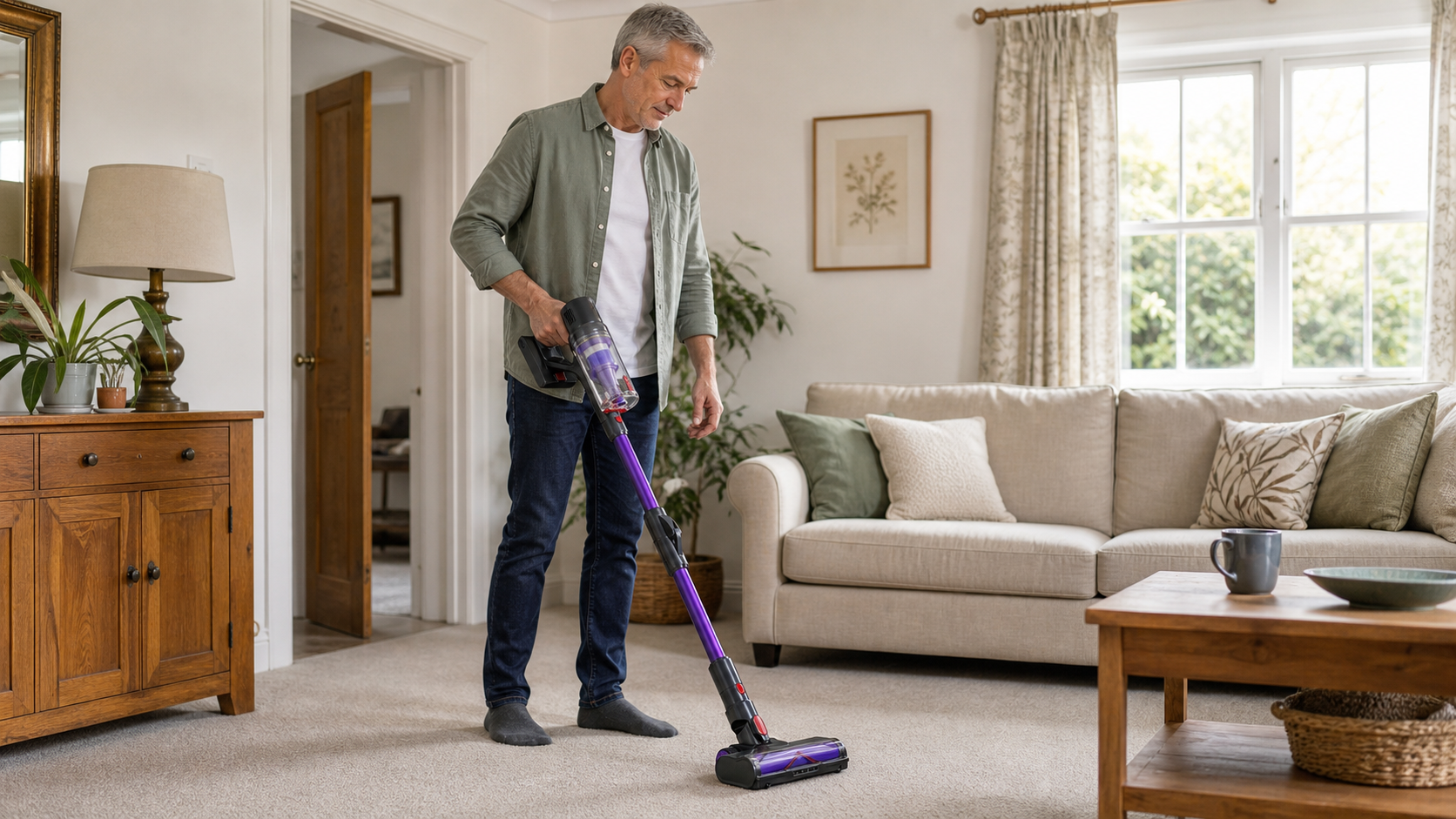
Learning how to vacuum carpet properly does not require a complicated routine. The biggest difference usually comes from moving at a steady pace, overlapping each pass and keeping the vacuum's airflow clear.
A quick pass may remove visible crumbs, but fine dust, hair and grit can settle deeper between carpet fibres. Taking a little more time helps the floor head stay in contact with the surface and gives the brush roll and airflow a better chance to lift debris.
This guide covers a simple method for fitted carpet, low- and medium-pile carpet, rugs and busier areas of the home. Always check the carpet manufacturer's care advice first, especially for wool, delicate fibres or deep-pile styles.
Why Vacuuming Technique Matters
Carpet holds dust differently from a hard floor. Particles can settle below the visible surface, while hair and fibres may cling to the pile. A motorised floor head can help loosen this material, but technique still matters.
Moving too quickly can reduce the time the floor head spends over each area. Leaving wide gaps between passes can also create narrow strips that are not cleaned as thoroughly.
A controlled pattern makes the job easier to follow and reduces unnecessary repetition. You can see which areas have been covered and give extra attention only where it is needed.
Before You Start
Check the Carpet Care Instructions
Some carpets and rugs need gentler treatment than others. A powered brush roll may not be suitable for every long-pile, looped or delicate surface. Check the flooring or rug manufacturer's guidance before using a motorised floor head.
Clear a Practical Route
Pick up cables, clothing, coins, small toys and other objects that could enter the floor head. Move light furniture where practical, but do not turn a routine vacuum into a major room rearrangement. The aim is to create a clear route that you can follow without repeatedly stopping.
Check the Vacuum
Before a longer carpet clean, check that the dust cup is not packed, the filter is clear and the brush roll can turn freely. A full dust cup, blocked airflow or tangled brush roll can make the vacuum feel less effective.
If your vacuum offers different power or floor settings, choose one that suits the carpet rather than automatically using the strongest mode. A higher setting can be helpful for stubborn debris, but it may also make some carpets harder to push across and reduce cordless runtime.
How to Vacuum Carpet Properly
1. Start at the Furthest Point
Begin at the side of the room furthest from the exit and work back towards the doorway. This gives you a clear route and prevents you from repeatedly walking over areas you have just cleaned.
2. Move Slowly and Keep the Floor Head Flat
Push the vacuum forward at a comfortable pace, then draw it back over the same section. Keep the floor head flat against the carpet rather than lifting or twisting it at the end of each stroke.
There is no need to move unusually slowly. The aim is simply to avoid rushing so that the floor head has time to loosen and collect debris.
3. Overlap Each Pass Slightly
Move across the room in straight sections and overlap the previous pass by a small amount. This helps cover the full width of the carpet without leaving narrow gaps.
Use the floor head as a visual guide. A consistent pattern is easier than moving randomly around furniture and returning to the same area several times.
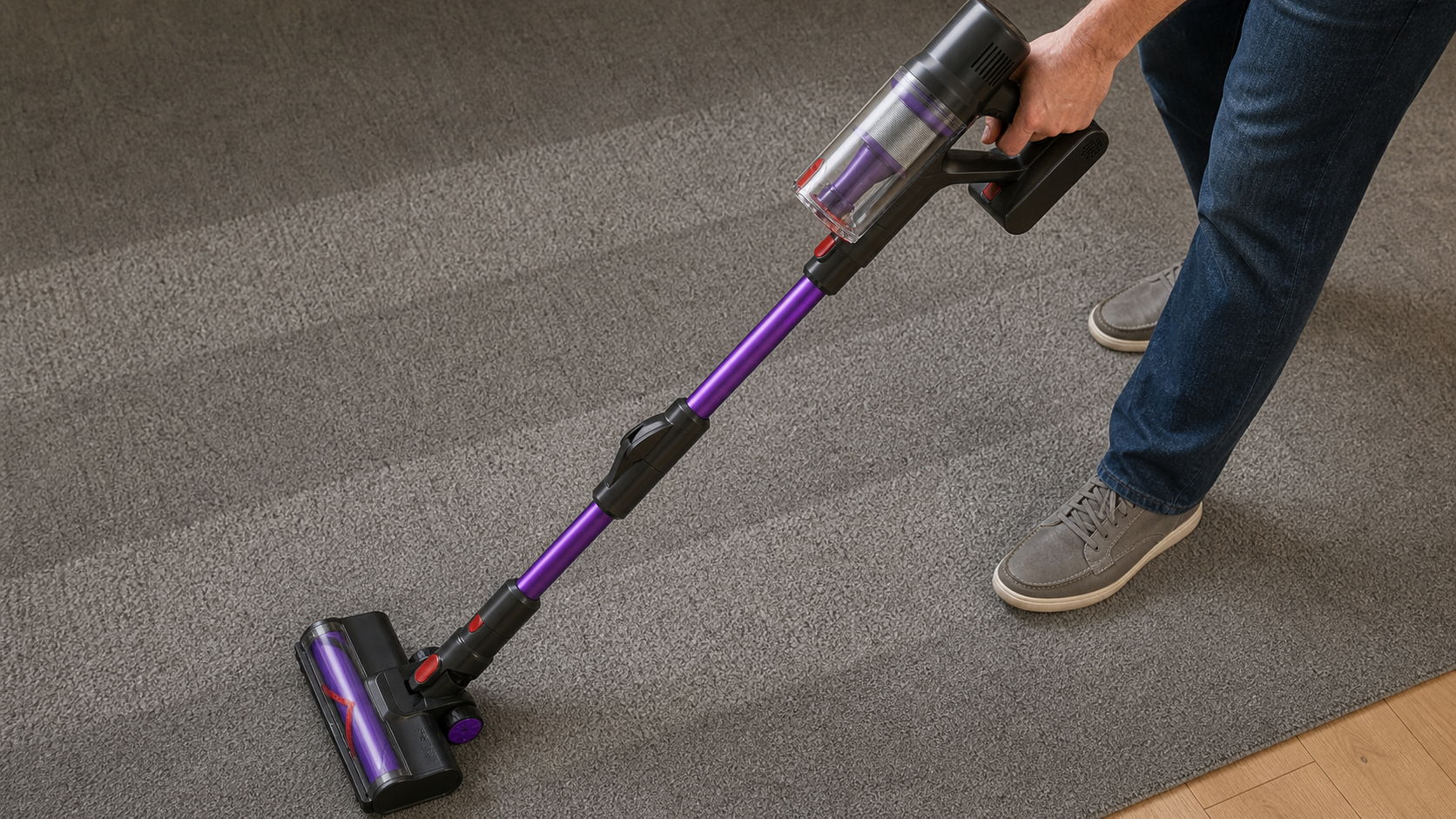 Slightly overlapping each pass reduces the chance of leaving narrow strips untouched.
4. Change Direction in High-Traffic Areas
Hallways, entrances, the space in front of a sofa and routes between rooms usually collect more grit and flattened dirt. After the first set of passes, vacuum these areas once more from a different direction where space allows.
A second direction can help lift material held between the carpet fibres, but repeated passes are not necessary everywhere. Concentrate the extra effort on visibly busy areas.
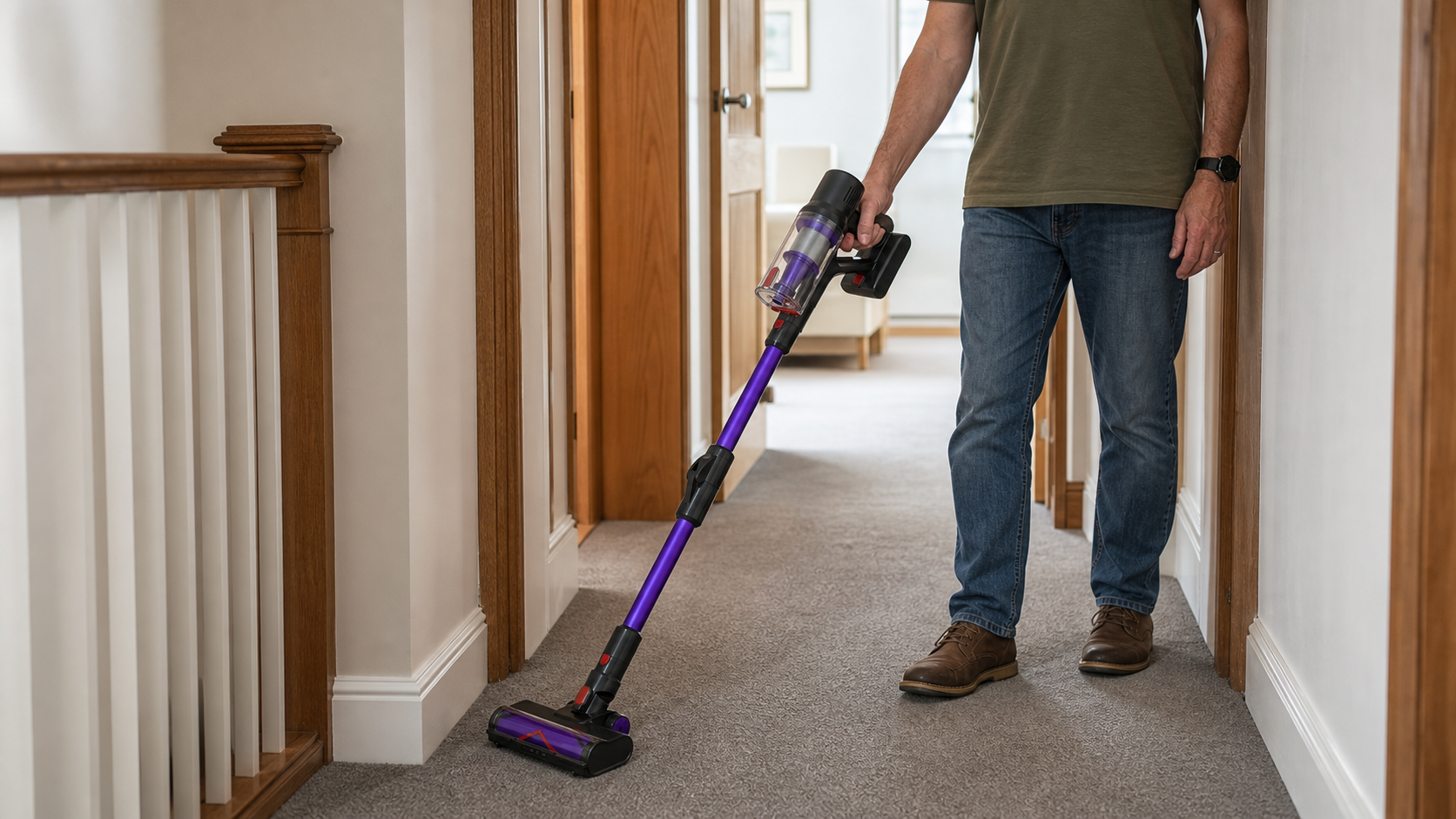 High-traffic areas may benefit from a second pass in a different direction.
5. Pay Attention to Edges and Furniture
Dust and hair often collect where fitted carpet meets skirting boards, furniture legs and the edges of a room. Guide the main floor head carefully along accessible edges without striking the wall or furniture.
For narrow gaps that the floor head cannot reach, use only an attachment supplied or approved for your vacuum. Do not force the main floor head into a space that is too small.
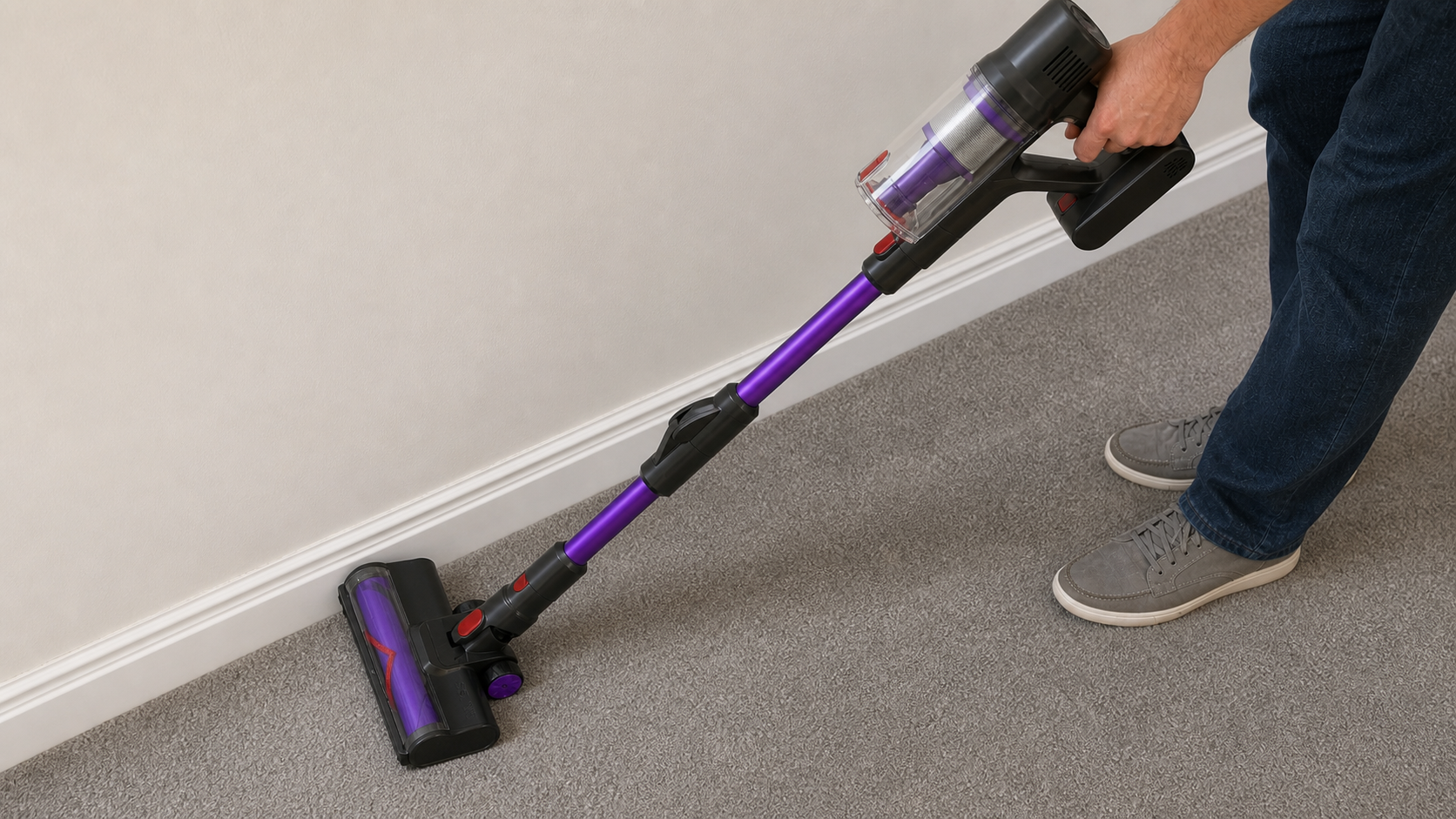 Take a little extra time where fitted carpet meets skirting boards and furniture.
6. Check the Result Before Repeating the Whole Room
When you finish, look across the carpet from more than one angle. Natural light can make remaining hair or crumbs easier to see. If one section needs more attention, repeat that area rather than vacuuming the entire room again.
How Often Should You Vacuum Carpet?
The right schedule depends on foot traffic, pets, household size and how quickly dust becomes visible. Busy living areas and hallways may benefit from several light cleans each week, while lower-use rooms may need less frequent attention.
A practical approach is to clean when the surface starts to show debris and give high-traffic routes a little more attention. Consistency matters more than following a rigid timetable that does not suit your home.
Adjust the Method for Different Carpet Types
Low-Pile Carpet
Low-pile carpet is generally easy to move across. Use straight, overlapping passes and check edges where fine dust can gather.
Medium-Pile and High-Pile Carpet
A thicker pile can create more resistance. Use a suitable floor or power setting if your vacuum provides one, and avoid forcing the floor head. If the vacuum becomes unusually difficult to push, stop and check the carpet guidance and brush roll.
Wool and Delicate Carpet
Wool, looped fibres and specialist carpets may require a gentler head or a non-motorised approach. Follow the carpet maker's instructions rather than assuming one setting is suitable for every surface.
Rugs
Make sure the rug is secure before vacuuming. Work from the centre towards the edges and reduce suction or change tools if the rug lifts, curls or moves. Take extra care with fringes, which can become caught in a rotating brush roll.
Common Carpet Vacuuming Mistakes
Moving so quickly that the floor head barely stays over each section
Using random strokes and repeatedly missing narrow areas
Vacuuming over cables, coins or other objects that could enter the floor head
Ignoring a full dust cup, dirty filter or tangled brush roll
Using maximum power for every task without considering the carpet
Forcing a motorised floor head across delicate or unsuitable carpet
Vacuuming damp debris with a machine designed only for dry use
Using a Cordless Vacuum on Carpet
A cordless vacuum can make carpet cleaning easier to fit into everyday routines because it can move between rooms without a cable. Runtime is still worth managing: use a normal setting for light debris and reserve stronger power for areas that genuinely need it.
Keeping the dust cup, filter and brush roll clear also helps the vacuum use its available power more effectively. If performance suddenly changes, check for maintenance issues before assuming that the battery or motor is at fault.
SIXPAD S80 Carpet Cleaning Tips
When using the SIXPAD S80 on suitable carpet, keep the floor head flat, move in steady overlapping passes and give busy areas a second pass where needed. Check the removable brush roll regularly for wrapped hair and fibres, particularly after cleaning bedrooms, rugs or pet areas.
The folding tube can help with access around lower furniture. Keep a comfortable grip and let the floor head stay flat as the tube bends, using the configuration that feels stable and appropriate for the space.
Final Thoughts
Vacuuming carpet properly is mainly about covering the surface methodically. Prepare the room, keep the vacuum maintained, move at a steady pace and overlap each pass slightly.
Once this becomes part of your routine, you can spend less time repeating the same areas and more time focusing on the places that actually collect the most dust and hair.